HE WAS LEMMY & HE PLAYED ROCK’N’ROLL ROLL
On December 24, Motörhead’s legendary frontman would have been 80 years old. On the 10th anniversary of his death, and his band’s 50th anniversary, we celebrate the man, the music and the myth
WORDS: DAVE EVERLEY & RICH HOBSON
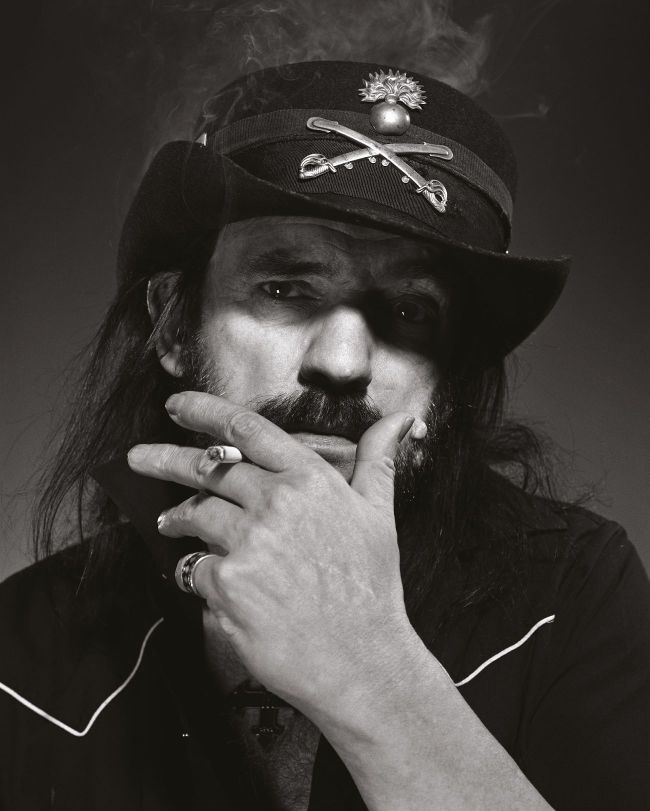
GETTY/FRANK BAUER/CONTOUR
Ian Fraser Kilmister didn’t just live rock’n’roll, he was rock’n’roll. For 40 years, this roaring warlord led Motörhead on a crusade to show every other band that had ever existed up for the makeweights they were. During that time, no bottle of Jack Daniel’s was left undrunk, no cigarette left unsmoked, no line of speed unsorted, no eardrum unbattered. It wasn’t so much a badge of honour as instinct. He was Lemmy. That is what he did.
2025 is a year of Motörhead anniversaries. It marks 50 years since the band formed, and 10 years since their frontman died. Lemmy passed away on December 28, 2015, four days after his 70th birthday and 17 days after what would turn out to be Motörhead’s last gig – exactly the same amount of time between his great friend Ozzy Osbourne’s farewell at the Back To The Beginning show and his own passing a decade later (maybe the old reprobates had planned it in advance).
Lemmy may no longer be with us, but his legacy definitely is. Over the next 22 pages, you will find a list of the 50 greatest Motörhead songs, picked by some of metal’s biggest names, and a look at how friends and fans are keeping Lemmy’s spirit alive.
But first, this is the story of the real man behind the myth, by the people who knew him.
Lemmy was born in Stoke-on-Trent on Christmas Eve, 1945, and raised by his mother after his biological father, a vicar, left the family when his son was just three months old. The young Lemmy passed through several groups in his late teens and early 20s, including The Rockin’ Vickers and Sam Gopal, but it was his four-year stint in psychedelic explorers Hawkwind in the early 70s that gave him his first real taste of success.
Dave Brock [Hawkwind singer/guitarist]: “Being in a band with him was never dull. We were young and Hawkwind was an eccentric band, so he fitted in with us really well.”
Phil Campbell [Motörhead guitarist 1984 onwards]: “I actually met him way back when he was in Hawkwind. I went to see them at the Cardiff Capitol Theatre and hung around in the big foyer hoping to meet them. Lemmy was the only one that came out. He signed my programme. I’ve still got that somewhere. If someone had told me that day I’d be in a world-famous band with that guy for over 30 years… it’s inspiring.”
Dave Brock: “Part of the growing divide [in Hawkwind] was that Lemmy took downers and speed, while the rest of us were into LSD. Things came to a head when he got pulled at the Canadian border in 1975. Lemmy had a tiny packet of speed on him. They mistook it for cocaine and he got thrown into jail. So with everyone believing he might be in prison for a year or more, there was a big band meeting. He was voted out by two to four. It fell to me to break the bad news. He was really upset. He went back to England. Apparently he slept with several of the band’s girlfriends… who knows whether or not that’s true.”
Lemmy bounced back from his firing from Hawkwind by forming a new band in 1975. Originally named Bastard, they were wisely rechristened Motörhead after a song he’d written and recorded with his former. Thanks to albums such as 1979’s Overkill and Bomber, 1980’s Ace Of Spades and 1981’s No Sleep ’Til Hammersmith (a UK No.1), Lemmy, guitarist Fast Eddie Clarke and drummer Philthy Animal Taylor became one of the rare bands that metal fans, punks and bikers were all allowed to like.