Masterplan Reading Signal Works
The logic of design: Reading the signs and thinking it out
Paul A. Lunn offers a variety of layout plans based around Reading Signal Works.
Track plans to get you thinking in three dimensions
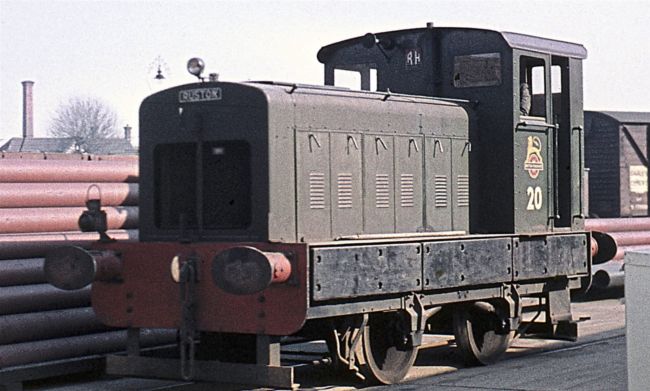
Ruston 88DS 20 sits in Reading Signal Works yard in March 1961. This diminutive shunter worked at Reading for several decades until it was usurped by a Class 06 brought down from the Scottish Region.
COLOUR RAIL
G rowingup in a railway family, surrounded by railway staff and railway modellers, means I’ve experienced many things first hand, relevant to what I do in Model Rail. Over the years I’ve built up a resource that in one sense is great – it reflects all my preferences – and in another, my shortcomings. There’s such a lot I know nothing or very little about!
Normally, creating layout plans can be relatively easy, usually because it has been me who has chosen the theme and I often play to my strengths.
However, there’s a part of me that really enjoys being given something, completely off my radar, because I know it will stretch my skill and imagination further. Thus it was I received an email from Model Rail editor George Dent, asking if we can do something based around Reading Engineers’ Yard and/or Signal Depot.
This was, ostensibly, to coincide with the arrival of Model Rail’s exclusive ‘PWM’ locomotive, with a number of the Ruston & Hornsby diesels spending their careers at Reading. Furthermore, other small diesel locomotive types became synonymous with the Berkshire town during the late years of British Rail, including a Class 06 and a Ruston 88DS, both of which are in the Hornby catalogue.
After trawling through my bookshelves, I came up blank in terms of useful information on Reading’s Departmental sidings. However, there’s nothing like a challenge, so I set about searching the internet.
THE RIGHT SIGNALS
As outlined in this month’s Masterclass (p40), the ‘PWM’ locomotives were built primarily to operate with permanent way wagons and, at Reading, this meant working the Engineers’ Yard beside the diesel depot, to the west of Reading General station. These sidings were taken over by the Permanent Way Department in the early 1970s and used to load/ unload and marshal engineers’ vehicles of varying types, such as rail carriers, ballast and spoil wagons. In terms of layout design, these sidings are not particularly inspiring, although the adjacent diesel depot does present a natural focal point.