HOW TO BUILDING HEMYOCK
PART 2: MODIFYING A BASEBOARD AND LAYING THE TRACK
In this instalment, Chris Nevard finalises his trackplan, lays the permanent way, sinks a riverbed into a solid baseboard and customises a water tower.
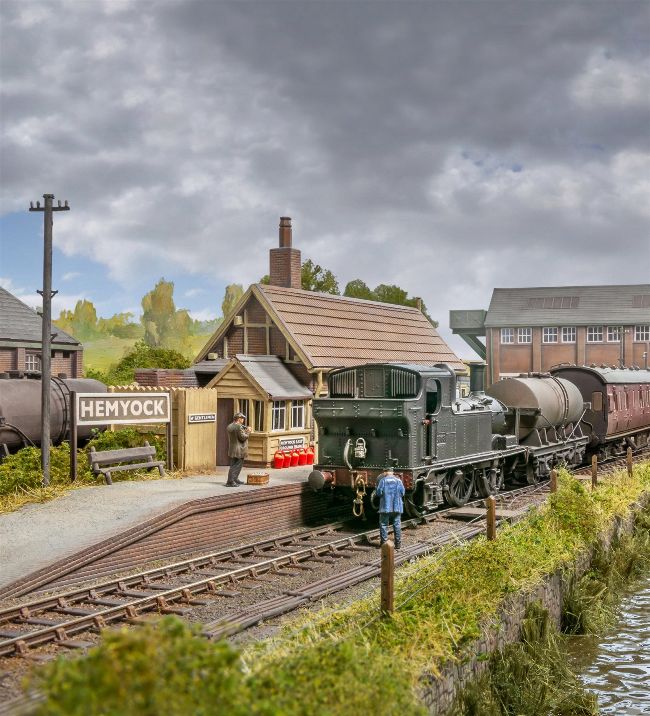
PHOTOGRAPHY: CHRIS NEVAD
Last month, the story of this layout began with an outline of the project and the construction – from scratch – of Hemyock station building and platform. This structure forms one of the key focal points of the layout and I was determined to get it right.
However, there’s much more to a layout than just a station, so this month we’ll look at how the track plan and baseboards were created, prior to the actual laying of the ‘iron road’. The baseboard stage was helped enormously by the use of laser-cut plywood kits although, as supplied, the boards’ upper surfaces were flat.
Creating different ‘levels’ on a model railway layout can be vital, in order to give a scene a realistic sense of depth and, with the River Culm meandering alongside the tracks at Hemyock, the plywood baseboard components would have to be modified.
But we’re getting ahead of ourselves a little. My first job was to create a track plan…
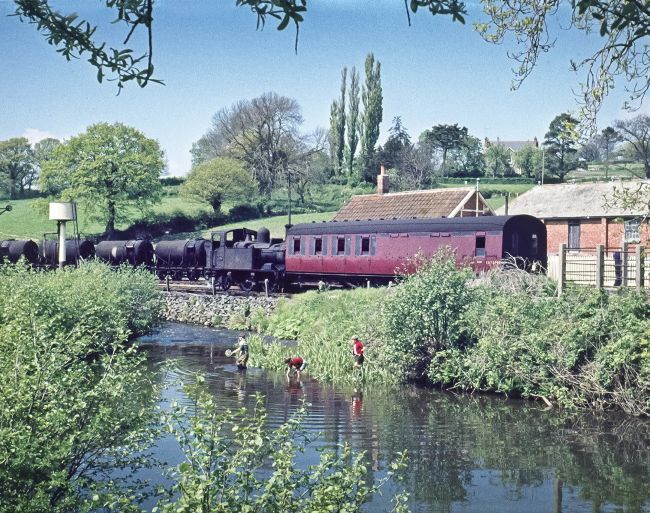
While children frolic in the River Culm, ‘14XX’ No. 1466 simmers away in Hemyock’s platform in May 1963, with a single ex-LNER four-compartment brake coach in tow. Note the grubby six-wheel milk tanks in the background.
CJL COLLECTION
DESIGNING THE TRACKPLAN
The track plan was designed on RailModeller Pro software, this being one of the few track planning programs that can be used on an Apple Mac computer. It’s a simple drag‐and‐drop system, with most major track brands being available within the software’s extensive library. Microsoft Windows users have the option of using Anyrail or SCARM, both of which offer a similar experience.
With a 9½ft by 5ft ‘L’‐shaped footprint available for the scenic boards, it took a little time to arrange a suitable track layout in RailModeller Pro, following the essence of the prototype location as closely as possible. Indeed, while I would ultimately build the track using C&L Finescale components, my initial track plan was created using the Peco Streamline library.