CIRCUS MAXIMUS
JOE COCKER’s Mad Dogs & Englishmen tour was the apogee of hippy rock’s communal ethos and the coronation of its wizardly MD, LEON RUSSELL. In this extract from his deep-diving new Leon biography, BILL JANOVITZ sifts its sanctified spirit from the orgies and angel dust, and surveys its frazzled aftermath. “We honestly thought a flying saucer was going to pick us all up, and send us off to heaven.”
\
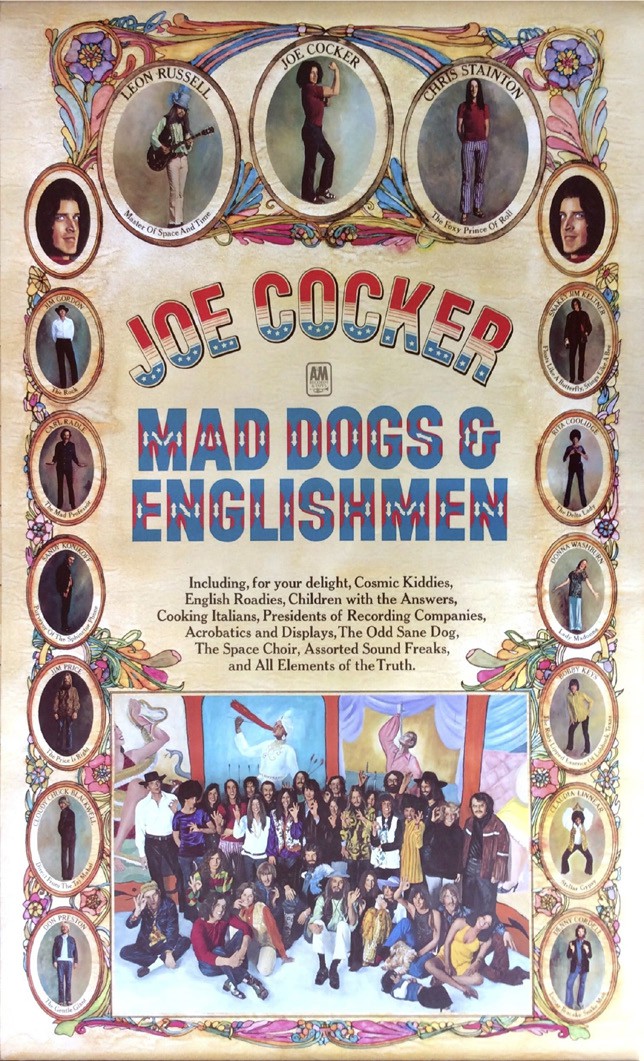
Photograph: LINDA WOLF
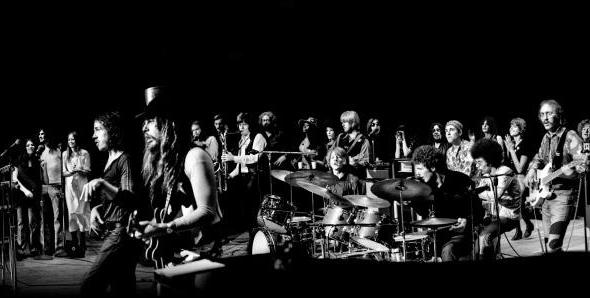
Out come the freaks: (foreground left) Joe Cocker and Leon Russell lead the full Mad Dogs & Englishmen complement on-stage, April 1970.
Linda Wolf’s Tribute: Cocker Power is available at
www.cockerpowerbook.com THE FILLMORE EAST IN MANHATTAN WAS packed on March 27, 1970. The audience filled the hall right to the lip of the stage. They were there to see Joe Cocker, who’d recently skyrocketed from obscurity to stardom on both sides of the Atlantic, in large part due to his knockout performance at Woodstock the previous August: a blue-eyed soul singer for the rock set. The documentary film of that festival had just been released the day before the Fillmore show, but his definitive version of The Beatles’ With A Little Help From My Friends, a Number 1 single for Cocker in the UK, was making waves in the States.
“Delta Lady!” yelled a woman in the crowd.
“Delta Lady it is, my love,” purred Cocker.
The drums rumbled in, syncopated with the horns, bass, and Leon Russell’s hard-driving piano. Even in a band of hippy gypsies, Russell stood out with his long hair and Old Testament beard, bedroom eyes peering out from under a green felt top hat, tank top basketball jersey emblazoned with ‘HOLY TRINITY’ across his chest, and tight striped bell bottoms.
Leon was the man; the man who counted this number off; the man who wrote and arranged the song. He was the man who put together the musicians, a dream band of ace Americans, for an English guy who grew up listening to Ray Charles, soul, and blues on the radio back home in Sheffield, fantasising about how to get that tour – the tour that was saving Joe Cocker’s ass, whether he appreciated it or not.
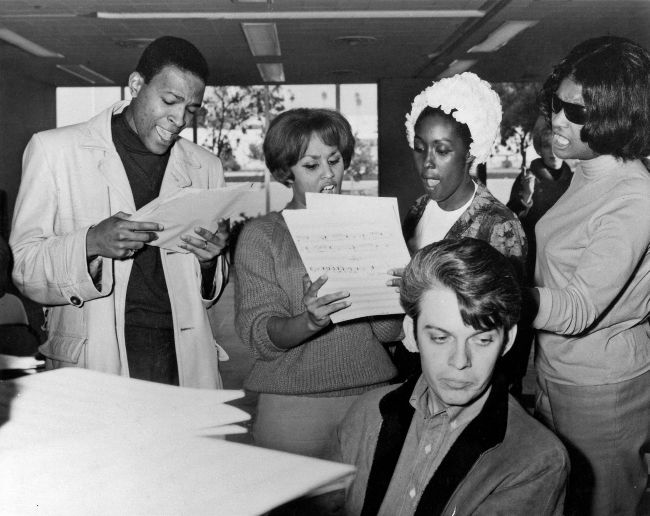
Getty (4)
It was a life-changing gig for Russell, who at the still-tender age of 27 was already a respected sideman, first-call pianist among LA’s iconic Wrecking Crew, a burgeoning songwriter, and co-producer (with Denny Cordell) on Cocker’s recent second album. Now – with a debut solo LP emerging on his own label, Shelter – Russell was back on the road, a decade after bursting out of Tulsa as a teenager backing Jerry Lee Lewis on a 1959 tour of nightclubs.
And here was Cocker, centrestage, under a white spotlight, fronting a 22-piece big band Russell had whipped together – asoul-rock revue with a choir of hippies; two drummers on full kits plus another on congas; two more drummers relegated to tambourine; bass; multiple guitars; two keyboardists; a horn section The Rolling Stones would soon scoop up; and a rhythm section that would soon be the backbone of Derek And The Dominos.
Various hangers-on filled the stage’s wings; an actual dog or two wandered around. All but Cocker were lit in smoky auburn or hidden in the shadows, the trippy Joshua Light Show projected on the large screen behind them, while a film crew captured the spectacle.
IT THAD ALL BEEN PUT TOGETHER IN A MAD DASH. Cordell had turned up at Russell’s house on Skyhill Drive in the Hollywood Hills on March 11, with what Russell remembered as a very dismal Joe Cocker in tow.”
Cocker was a troubled man. Though he was electrified in performance, off-stage he was taciturn, self-medicating. From Woodstock to the Isle Of Wight festival and a tour that lasted until early 1970, with his face on the cover of Rolling Stone, Cocker had then fled to Los Angeles. He was exhausted and needed a vacation.
“By the end of ’69, I’d done Woodstock, and the Grease Band and I weren’t getting along well,” recalled Cocker of his state, and his group. “[Grease Band keyboardist] Chris Stainton and I stuck it out for the most part… I stayed at Leon’s house. People were very naked. I got the clap there.”
Cocker’s respite would not last long. His mobbed-up New York manager Dee Anthony had booked an American tour of 48 cities in 56 days. “The more Joe said ‘No’, the more Dee was becoming ominous,” said Alan Spenner, bassist in the Grease Band. “The rest of us more or less caved in and said, ‘Well, it looks like we’re doing it anyway,’ but Joe stuck to his guns.”