STRAIT, SOUND SWIMMING
Bert Thomas accepted the challenge of marathon swimming and inspired a tradition that continues today By Elaine K Howley
By Elaine K Howley
STRAIT OF JUAN DE FUCA
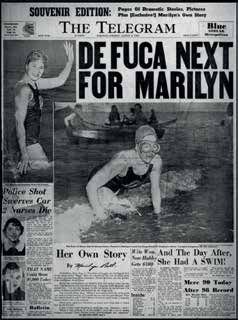
The Telegram, a Toronto newspaper, announced Bell’s success in the English Channel and her upcoming Juan de Fuca Swim in August 1955
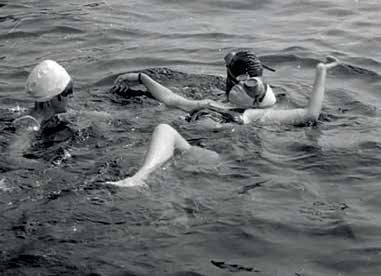
Marilyn Bell is removed from the water on her first attempt to swim the Strait of Juan de Fuca in August 1956
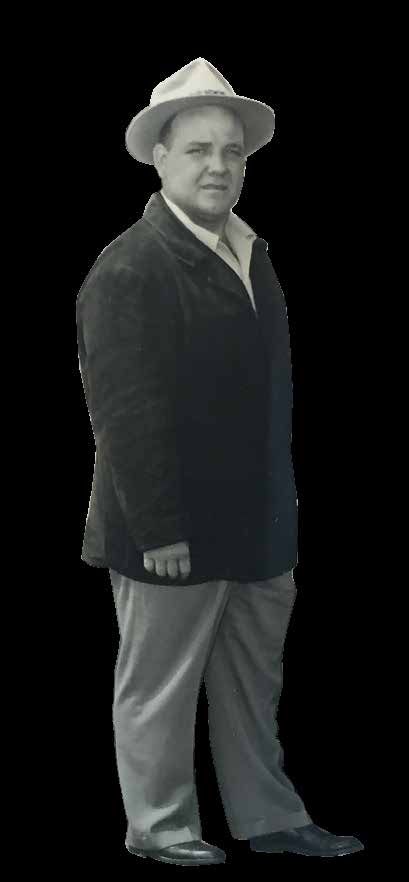
BERT THOMAS
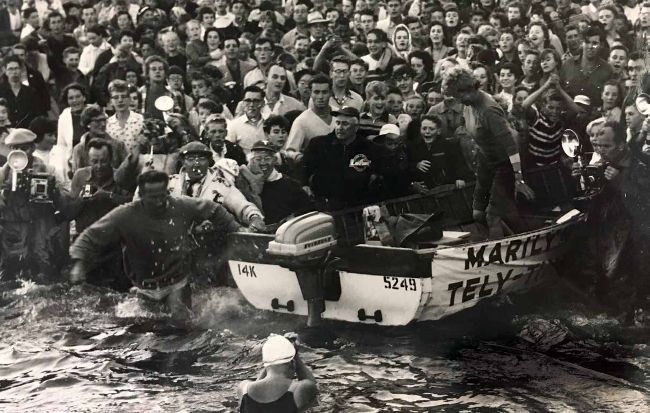
Hundreds of spectators greeted Marilyn Bell as she completed the Strait of Juan de Fuca in August 1956
The 1950s in America signalled a time of great hope and prosperity. Upon the conclusion of the Second World War, things were looking up in the most industrialised nation in the world, buoyed as it was by victory on the global stage and a roaring, war-infused economy. It was a time of promise and change, when the impossible was nothing. Perhaps it was that same sense of being able to triumph over all that created the right environment for marathon swimming to flourish.
Spurred on by the likes of Florence Chadwick, Marilyn Bell and Greta Andersen, and lured by the promise of a “quick” buck in some cases – newspapers of the era were flush with cash and spending it freely to sponsor swimmers and races around the country –male swimmers jumped into the fray and churned their way across a myriad of waterways. But for whatever reason, many of them have been forgotten. In a rare instance of the lasting impression of female empowerment, the ladies of marathon swimming in the 1950s and 1960s are in many cases more recognisable household names today than their male counterparts.