MARINE Cephalopods
The trouble with CEPHALOPODS…
Who wouldn’t be excited about keeping an octopus? Alas, such a magnificent creature is a high demand animal with a short life. Richard Ross discusses.
RICHARD ROSS
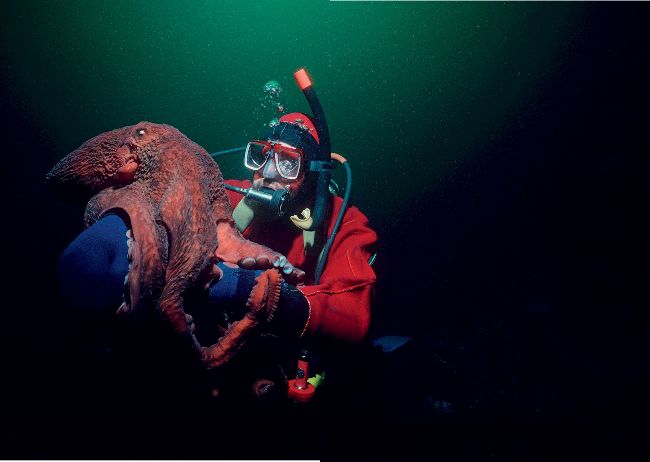
Caption, caprion, caption
A former senior biologist, and MASNA’s Aquarist of the Year for 2014, Richard is a committed ceph fan.
CEPHALOPODS ARE some of the coolest animals on the planet. Octopus, cuttlefish, squid, and curiously shelled nautilus intrigue us for good reason; their big eyes, along with their many arms and tentacles, make them simultaneously attractive and repulsive to the human eye.
They move like they are from another planet. Their copper-based blood is blue. They are masters of camouflage, capable of changing the colour and even the very texture of their skin. They have jet propulsion, suckers, a parrot-like beak, three hearts, weird shaped brains, extensive nervous systems, magnificent eyesight, amazing behaviours, a toxic bite, and can disappear in a cloud of ink when they are threatened. What’s not to love? As a result of all this, all too many people look into those large ceph eyes, and think “I’ve got to have one in my tank!” But do cephs really make great pets? For the dedicated, experienced, and slightly insane saltwater aquarium keeper? Yes. For everyone else? Probably not. It is my hope that this article will encourage you to think hard and long about whether keeping these animals is right for you.
General considerations
It is important to realize that all cephalopods are not the same, each having its own suite of specific requirements. You can’t just get any old ceph and expect to keep it successfully. Squid need open water, octopus spend most of their time on the substrate or hidden in their dens, cuttlefish need both open water and aquascape to hide in, while nautilus seem to do better in taller tanks.
To make matters more complicated, any species of a given kind of cephalopod can have drastically different requirements from another species. For instance, Octopus hummelincki, is about the size of a tangerine and comes from seas with an average temperature of around 25°C.