OSIBISA
Every month we get inside the mind of one of the biggest names in music. This issue it’s Osibisa. The Afrorock band formed in 1969 and were responsible for bringing African music to new audiences in Europe and North America. A young Roger Dean created their early album covers and their combination of African rhythms with Latin grooves played an important role in popularising world music. Over the years, they’ve captured the hearts of audiences at Ronnie Scott’s and the Royal Festival Hall, as well as Cropredy Convention. Founder members Teddy Osai and Wendell ‘Dell’ Richardson tell the story of their musical mission…
Words: Kris Needs
F ifty one years ago, four expatriate Africans and three Caribbean musicians came together in London as Osibisa. Flying their “crisscross rhythms that explode with happiness”, UK audiences had never seen anything like the seven smiling figures in African robes harnessing highlife brass fanfares and explosive percussion breaks to supercharged progressive rock, igniting an unfettered joy and cavorting rarely seen at gigs before.
Osibisa’s euphoric celebration of African culture, crosspollinated with rock, jazz and soul, was a whole new thing, laying crucial foundations for world music live and on record. The band’s roots go back to saxophone-playing leader Teddy Osei’s childhood in West Africa. Born in 1937, he was introduced to traditional instruments at school, taught himself sax to jazz records at college and formed ‘highlife’ band The Star Gazers with future Osibisa drummer Sol Amarfio. The pair were joined by Osei’s trumpeter brother Mac Tontoh in The Comets, scoring a West African hit in (I Feel) Pata Pata in 1958. Arriving in London in 1962, Osei washed dishes until winning a Ghanaian government grant to study music and drama. In 1964, he formed Cat’s Paw, warming up Osibisa’s melting pot corralling highlife, rock and soul.
Coming to the UK from Antigua at 11 and growing up in north London, guitarist Wendell ‘Dell’ Richardson formed the Sundae Times with bassist Calvin ‘Fuzzy’ Samuels and drummer Conrad Isadore, their 1969 album, Us Coloured Kids, a black rock presaging classic. After Samuels was recruited by Stephen Stills and Isadore joined Manfred Mann Chapter 3, Richardson was left with the band’s equipment. Meeting Ginger Baker’s Air Force percussionist Remi Kabaka led him to African rhythms as well as meeting Osei and Trinidadian organist Robert Bailey. Their name derived from ‘osibisaba’ (Fante for highlife), Osibisa’s original ‘beautiful seven’ were completed by Grenadian bassist Spartacus R and Nigerian percussionist-tenor saxophonist Loughty Lasisi Amao.
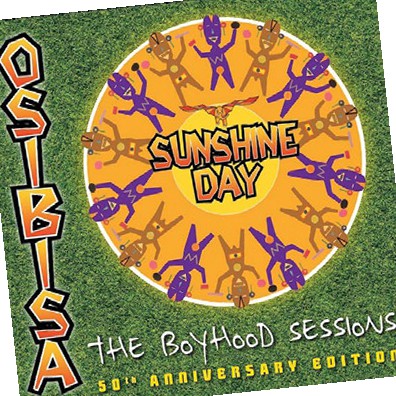
The Boyhood Sessions, 2020.
As a black band in racism-rife 70s Britain, Osibisa fought to win crowds and usually succeeded, generating a buzz without hype or trend-hopping. Melody Maker’s Richard Williams started a press buzz with glowing write-ups, notably their breakthrough appearances at Ronnie Scott’s, declaring, “They make quite a point of being unclassifiable… Highlife, jazz, rock, blues, soul, and – most of all the African heritage. Truly, this is Black Music… with purest joy.”