911 AT 60 A NEW DAWN
The arrival of the 996 in 1998 started a whole new era for Porsche’s Neunelfer. Total 911 explores its design and production – and its evolution into the 997
Written by Kieron Fennelly
Photography courtesy Porsche Archive
Although the decision to cross the Rubicon and abandon air-cooling for water-cooling, or more exactly fluid-cooling, was finally taken in 1991, it had been in the minds of Porsche engineers for several years. Reconciling the need for more power yet better mpg was a growing preoccupation during the 1980s. With the 911, Weissach had traditionally managed for years by increasing capacity and installing eversmarter Bosch electronic ignition systems. But heat dissipation from more-and-more potent air-cooled engines was a challenge. With the no-expensesspared 959 supercar, Porsche designed a watercooled head, a development used concurrently on the 3.2 flat six of the 956/962 sports racers. Engine cooling problems delayed and eventually caused the abandonment of the ‘super 911’ turbo, the 969.
In the late 1980s, manufacturers were moving to four-valve cylinder heads for their sportier models: these revved higher, yet gave cleaner combustion and better mpg. This route was problematic for Porsche, however: experience showed that the heat generated would never be sufficiently dissipated by air cooling. Multi-valve heads were in any case hardly unfamiliar territory: the (water-cooled) three-litre block of the 944 S was converted to 16-valve for the forthcoming 968 (and served additionally as a testbed for the new Variocam mechanism).
Doubts now hung over the future of air-cooling, not the least of which were the manufacturing-cost implications of continuing a design that no one else was building. Given this and the environmental factors, changing to fluid-cooled was entirely logical.
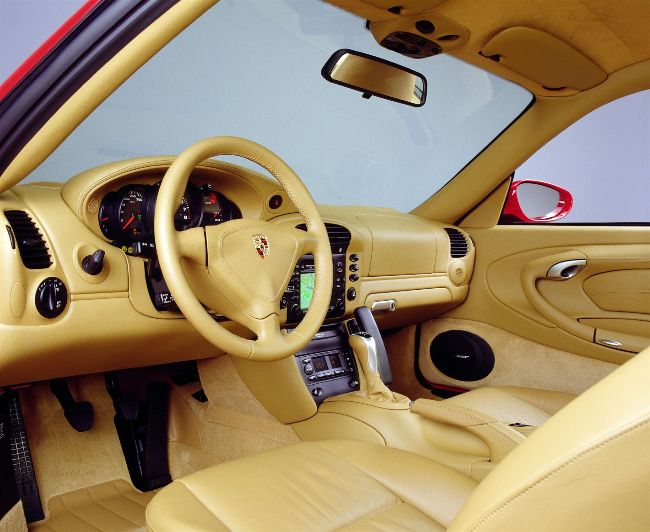
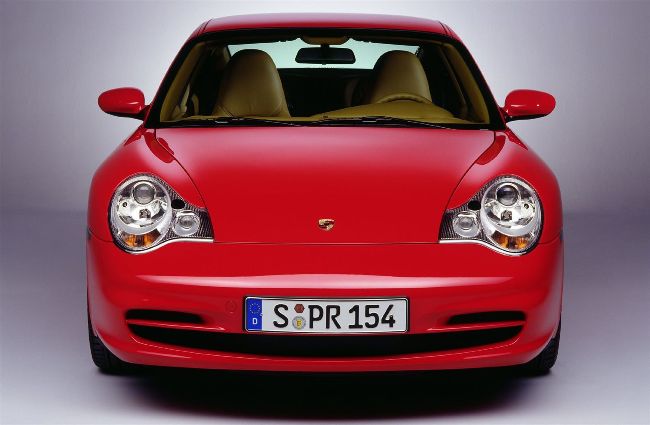
The 996 was the first all-new Porsche 911 since the original in 1963
The genius came in achieving the transition without fundamentally changing the car – the new 996 shared the same flat engine architecture as its predecessor, in the same shape, and with the same Porsche characteristics. If the move to share a platform with a second range, the Boxster, upset traditionalists, it has long been recognised that this was an inspiration borne of the need to stay in business yet maintain that very tradition of ‘Porscheness.’ That a company of Porsche’s size and limited resources could pull off such a coup remains a profound achievement.
One of the drawbacks of creating a following is disappointing the devotees. The Jaguar XJS which followed the incomparable E type is a prime example, and other cases of what is perceived as inferior to what went before abound in the motor industry. By any objective yardstick, the water-cooled 996 was a superior car to the 993 – faster, easier to drive, more comfortable, more economical and less expensive to service – but there were still vocal naysayers stuck in the previous century.