The future is virtual
THE FUTURE IS VIRTUAL
What does the rise of virtual production mean for the CG community? 3D World finds out from the experts
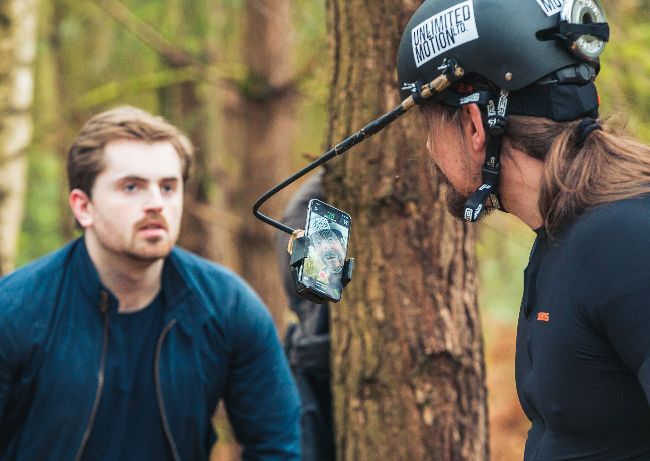
Ryan Garry behind the scenes on Anghenfil, his micro-budget motion capture film project
Whether you’re a 3D artist, VFX professional, filmmaker or student, you can’t go far these days without hearing the words ‘virtual production’. Studios and creators are constantly telling us that virtual production is revolutionising filmmaking, but what does it mean? What tools and techniques does it utilise? And, perhaps most importantly, why is it important to the 3D community at large? Will these high-end techniques become democratised? To answer these questions 3D World spoke to three very different creators, each using virtual production in unique ways.
Satore Studio, masters of visual design and immersive experiences, created a unique workflow using virtual production. Film director and founder of Unlimited Motion Ltd. Ryan Garry is utilising virtual production techniques to create the world’s first micro-budget motion capture feature film. Finally, innovative production studio Flipbook is perfectly placed to tell 3D World about the use of real-time engines and virtual production in the future of film and TV production.
WHAT IS VIRTUAL PRODUCTION?
Put simply, virtual production is the process of mixing traditional live-action filmmaking with computer graphics in real time. It means that filmmakers can see or interact with digital elements in-camera and on set and it encompasses a wide range of cutting-edge technology, from the huge LED screen used to transport audiences to a galaxy far, far away in The Mandalorian to the VR hardware that brought Disney’s The Lion King to life.
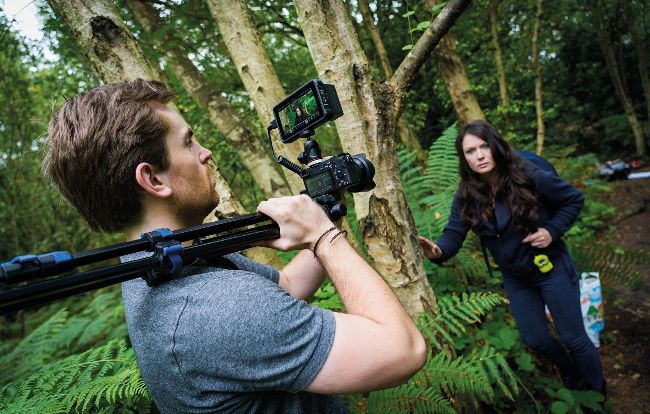
Ryan Garry shooting Anghenfil on location in the north-west of England
“The term is used very loosely at the moment,” explains Tupac Martir, founder and creative director of Satore Studio. “In the simplest terms, virtual production is the ability to use technology to bring environments to life, which can then be caught with traditional camera setups.”
Ryan Garry is quick to point out that virtual production is much more than the headline-grabbing advancements we’re used to seeing. “It’s the blending of physical and digital worlds,” he tells us. “This could be in the form of mega-sized LED walls, but also includes more affordable options like camera tracking – wherever you move the camera in the real world it moves in the virtual. By doing this, you can see VFX elements live on the camera monitor as if they exist in the real world.”
These capabilities are having a monumental effect on film production. “It enables VFX to be seen and changed in real time on set,” adds Garry. “If the director doesn’t like the size of an explosion, you can just modify it in-engine. It might not be the final render that’s used, but it massively speeds up the post-production workflow because a lot of the creative decisions have already been made. As these technologies advance and become more affordable, less imagination has to be spent wondering what the film is going to look like after postproduction. You can focus more on the world, both real and virtual, in front of you.”