Miniatures and Movers
On set, InCamera mix models and stop-frame animation techniques with custom engineering and sophisticated software
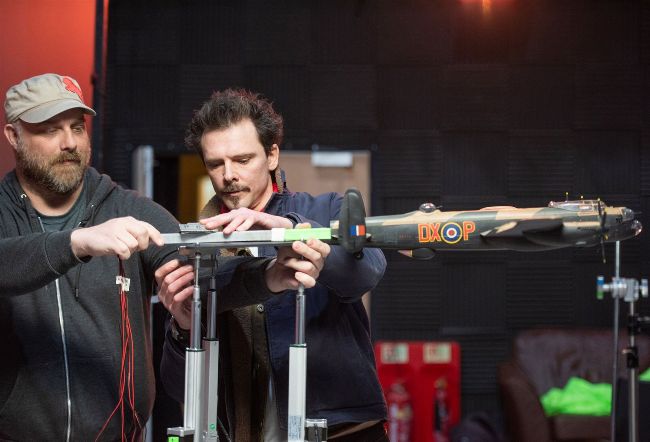
Tommy and JP very carefully fix our model to the custombuilt mover
Filmmaker Tommy Martin set about building an impressive 1/32 scale model kit of the hero Lancaster, complete with motorised propellers and top gunner.
Sigma Arts UK completed the paint and weathering effects to a high standard, which all culminated in a detailed shooting miniature. The Lancaster model kit was modified to match its full-size counterpart Just Jane, which is one of three surviving Avro aircraft remaining in the world, and that is currently housed at the Lincolnshire Aviation Heritage Centre. The museum itself is situated on the remains of RAF East Kirkby, a retired WWII bomber airfield where the exterior base location and aircraft interior sequences are to be shot with the principal cast.
Our miniature is ready, but to make her fly we needed significant engineering work, so James ‘JP’ Price set about building a bespoke model mover that would allow us to produce the aviation manoeuvres required.
PRACTICAL BENEFITS
With computers getting faster, smarter and cheaper, why would you want to go practical?
Anyone who’s seen a Marvel film in the last decade or so, and that’s pretty much everybody, knows how far CG has come in the last 30 years. The 90s saw some efforts hit and some miss. Terminator 2: Judgment Day and Jurassic Park stand out as particularly ground-breaking in the 90s, and the uptake and quality of CG has been exponential. So why bother with the old ways?
For us, there are a number of benefits to getting effects in-camera. Firstly, the experience. We find practical effects production an enormously collaborative process. Much of filmmaking is problem solving, and that goes double for effects. Bringing people’s different skills and trades together to achieve something is hugely rewarding.
We also love unintended consequences. CG is extremely controlled and relatively predictable, whereas practical is quite the opposite. We don’t necessarily know, particularly when working with natural elements, what we’re going to get. It’s a blessing and a curse, but sometimes you produce something that is way beyond what your original vision was. It’s an exciting, though sometimes nerve-racking process.
It’s understandable that not knowing exactly what you’re going to get is enough to spook directors away from taking the risk, though nowadays, since many shoot digitally rather than film, that risk does not necessarily carry the price tag that it has previously.