SECURING THE FUTURE
In an era of evolving global threats, the need for cutting-edge airport security has never been more important, reports
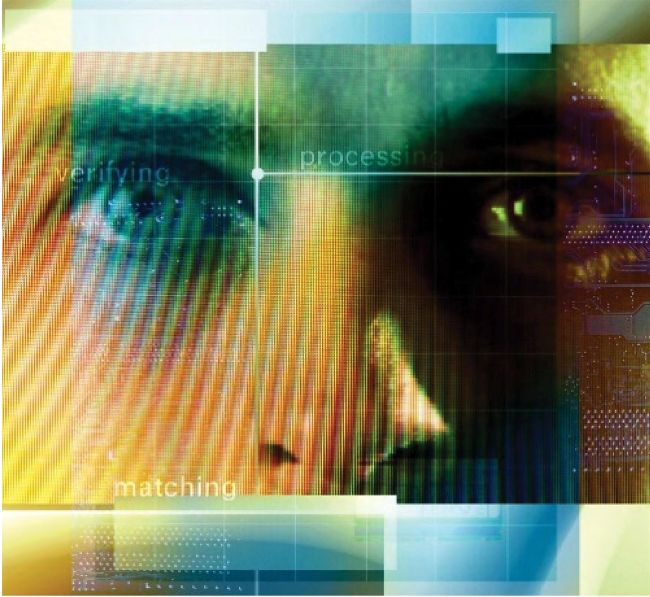
Thales’ facial biometric system THALES
Tom Batchelor
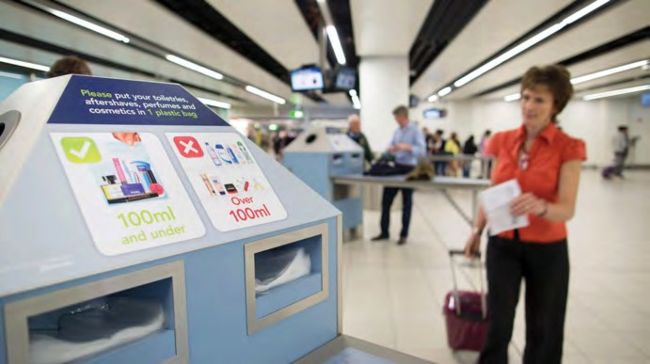
The days of the 100ml rule are numbered
GATWICK AIRPORT
As millions of passengers traverse the skies each day, airports face a battle to ensure safety without sacrificing efficiency, looking to groundbreaking technology and innovative strategies to help shape the future of travel.
The importance of security was demonstrated as far back as 1930, when the earliest recorded commercial aircraft hijacking took place in Peru. Since that first incident, the issue of security has gradually climbed the political agenda, and in the wake of the 9/11 attacks it became a global priority for governments and aviation authorities. Advances in technology and security procedures play pivotal roles in enhancing the safety of air travel, coupled with innovations that make the process more efficient and less intrusive.
Ending the 100ml rule
In the UK, the shift is towards scanning technology that will allow travellers to leave liquids and large electrical items in their cabin baggage as they negotiate security. Passengers are currently limited to volumes of liquid less than 100ml – a rule that was introduced in 2006 following the failed 2001 ‘Shoe Bomber’ plot. New measures outlined by the British government will eventually spell the end of the 100ml liquids rule. The measures will require airports to utilise computed tomography (CT) X-ray technology to provide a rotating 3D image of the contents of a passenger’s bag, as well as deploying advanced threat detection algorithms.
The updated liquid rules have been in place at Teesside since March 2023 and at London City since April 2023. Birmingham has installed the Smiths Detection HI-SCAN 6040 CTiX to facilitate a streamlined screening process, due to become operational in June 2024. Stephen Barker, development and construction director at Birmingham Airport, said the technology would, “enable us to process customers quickly, especially at peak travel times.”
At other major UK airports CT X-ray technology is expected to become operational during 2025 at the latest. Christopher Snelling, policy director at the Airport Operators Association, said: “This investment in next generation security by UK airport operators will provide a great step forward for the country’s air travel, matching the best in class around the world. It will make the journey through the UK’s airports easier and air travel itself more pleasant.”