DEVILS IN THE DARK
CRIME IN BLACKOUT LONDON
As WWII Britain plunged itself into darkness, it wasn’t just the German bombs civilians had to fear
Written by Callum McKelvie
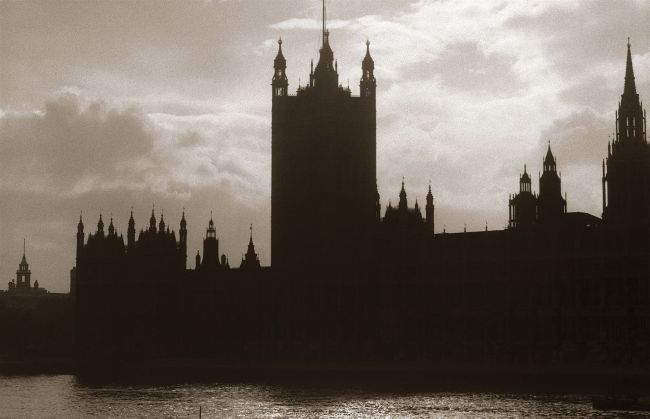
All images: © Alamy, © Shutterstock
EXPERT BIO
AMY HELEN BELL
Amy is a historian at Huron University, Canada, and the author of several books on the Second World War. Her book Under Cover of Darkness: Murders in Blackout London is out now from Yale University Press priced £22.
Crime in Blackout London
In early September 1939, as Hitler’s armies advanced across Europe, the British government began preparations for war. One of its concerns surrounded the threat of aerial attacks by the Luftwaffe – Nazi Germany’s air force. Technology had developed a great deal since the Zeppelin airship raids of the First World War and the Luftwaffe had already demonstrated its deadly capabilities during the Spanish Civil War (1936-39).
As part of Britain’s air defence, measures were taken on the ground to limit the effectiveness of German air raids. One of these was the blackout, the strict policy of extinguishing all light during the night hours to make it harder for German pilots to identify their targets. But what the government did not anticipate was the number of criminals who quickly took advantage of the newly darkened streets.
Historian Amy Helen Bell has meticulously researched this period, attempting to shine a light on the many horrific murders and crimes in her book Under Cover of Darkness: Murders in Blackout London. “My first doctoral work was on the London Blitz, exploring how civilians experienced it as the first total-war against an unseen enemy,” she tells us. “In researching this I came across a particular case in which a man murdered his wife and attempted to make it appear as if she had been the victim of a German bomb. I knew there had to be many more similar cases.”
“ALONGSIDE THE THIEVES AND BLACK MARKETEERS THERE WERE OTHER, FAR MORE SINISTER CRIMINALS AT WORK IN WARTIME LONDON: SERIAL KILLERS”
THE BLACKOUT BEGINS
The blackout was announced on 1 September 1939 – the same day that Nazi troops marched into Poland. Two days later, British Prime Minister Neville Chamberlain solemnly declared that Britain was now at war. On 16 October the first of many German air raids occurred. The purpose of these raids was twofold: they aimed to destroy strategic targets that were vital to Britain’s war effort, while also damaging the morale of the British civilian population.
While the Royal Air Force (RAF) took to the skies to fight the invaders and anti-aircraft guns targeted enemy planes from the ground, blackout measures plunged Britain’s cities into darkness. The RAF conducted a series of tests that concluded that even its own pilots struggled to identify landmarks when London was shrouded in darkness. As a result, street lamps were left unlit, homes used thick blackout curtains and car headlights were covered with tape so only a thin sliver of light lit the way.