AZTEC SACRIFICE
Why this great empire believed bloody rites and cannibalism brought order to the cosmos
Written by Ben Gazur
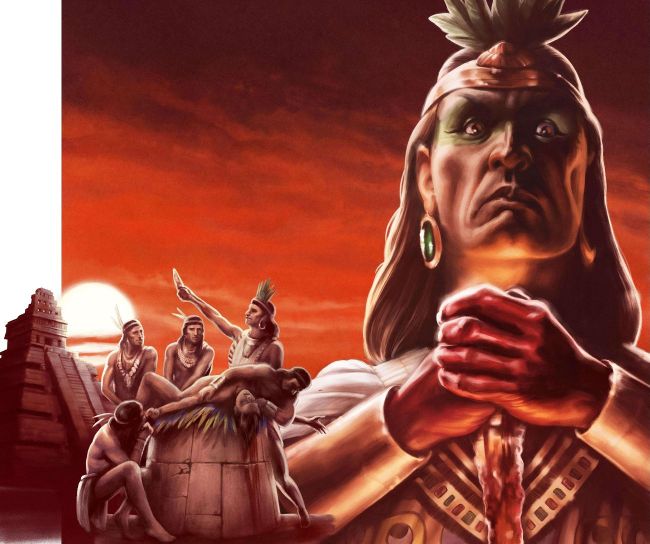
Illustration by: Dan Strange

© Adobe Stock
When the Spanish conquistadors under Hernán Cortés set out in 1519 to confront the Mexica, later referred to as the Aztecs, they were often startled to see altars displaying the grisly results of local religious practice. The stone blocks were dripping with blood and dismembered corpses were piled on top. Blood was smeared on the sides of temples.
Aztec priests sacrificed humans by slicing open their chests with stone knives and cutting out their beating hearts. Their limbs were then hacked off and eaten at feasts. While body parts of saints were routinely venerated in Catholic churches none were ever as fresh as this, and the body of Christ consumed at Communion was decidedly less gory.
That at least is the story told by chroniclers like Bernal Díaz del Castillo, who went with Cortés on this mission. Audiences in Europe were both thrilled and horrified by these accounts of native brutality and diabolical sacrifice. How much can we trust these accounts and why might the Aztecs have offered up so many human lives to their gods?
SACRIFICE FROM THE START
The origins of the Aztec empire were closely tied to sacrifice. The peoples known today as the Aztecs migrated from the north into central Mexico at some point in the late 13th century. Various tribes who spoke the Nahua language arrived and settled in the area, with the Mexica being among the last to arrive. But the Mexica would prove to be the most influential.
“STONE ALTARS DRIPPED WITH BLOOD AND DISMEMBERED CORPSES WERE PILED ON TOP”
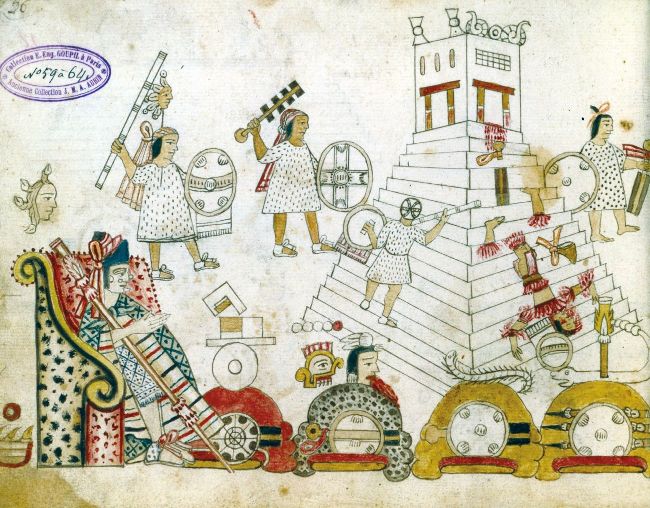
Many Aztec sacrifices took place on top of pyramid temples. The corpses were rolled down the steps
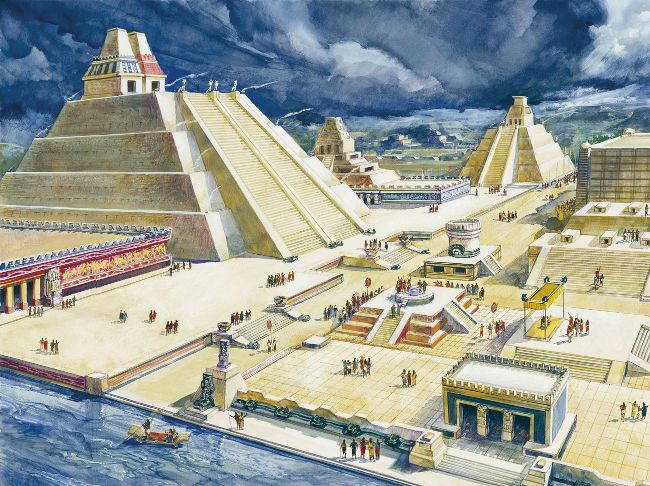
The main temple complex of Tenochtitlan was mostly destroyed
The migrant tribes mostly joined existing settlements in the area, with many serving as mercenaries for the leaders of the cities they joined.
The Mexica persuaded Achitometl, king of Culhuacan, to allow them to settle on a relatively desolate region of his land. They also offered to serve him as soldiers and they aided in many wars. Their success seems to have made the Mexica appear as a threat to the existing leaders of Culhuacan and tensions rose.
Perhaps to smooth the tensions, the Mexica asked Achitometl to give them his daughter, hinting that they would make her a god. This reverence pleased the king and he handed her over. The Mexica were as good as their word. They arrayed the princess in fine clothes and jewellery and worshiped her – then they killed her and flayed off her skin. Her skin was then draped over a priest, who danced around at festivities. Unfortunately, Achitometl recognised his daughter’s skin and the Mexica were driven from his kingdom, fleeing across Lake Texcoco. So the story of the Aztecs begins with human sacrifice. The legends of the Mexica describe them being led by a man named Tenoch, who had been told by the gods to settle where he saw an eagle eating a snake on top of a cactus in the middle of a lake. This omen appeared on an uninhabited island of Lake Texcoco in around 1325 and the Mexica began to construct their new home there. The image of the eagle and snake still appears in the middle of the Mexican flag today. They named this new city Tenochtitlan and it became the nucleus of the Aztec empire.
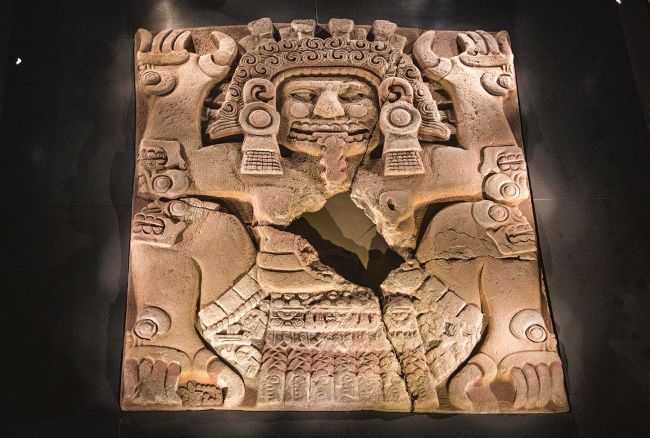
To survive the hostility of Culhuacan, the Mexica of Tenochtitlan had to accept the protection of the neighbouring city of Azcapotzalco. The rulers of Azcapotzalco dominated the region but when they assassinated the leader of Tenochtitlan the Mexica rose up in rebellion. They created a triple alliance with the cities of Texcoco and Tlacopan and sacked Azcapotzalco.