Astronomy
ASTRONOMY WITHOUT A TELESCOPE
You don’t always need optical aid to see beautiful things in the night sky – just wrap up warm, go outside and look up
Written by Stuart Atkinson
Top naked-eye targets

© Getty
The Milky Way
Observable: All year round, but best seen in summer and autumn
Late on a clear summer night, the sky is cut in half by a misty river of light. This is the famous Milky Way, a band of so many millions of stars that they appear to merge into one long, mottled trail. It looks at its best in summer and early autumn, when its brightest parts are highest in the sky.
The Pleiades (Messier 45)
Constellation: Taurus
Observable: Best seen in winter
On frosty winter nights this small, knotty cluster of icy-blue stars looks like a mini Big Dipper shimmering to the upper right of Orion. Its nickname is the ‘Seven Sisters’ because people with good eyesight can see its seven brightest members with their naked eye.
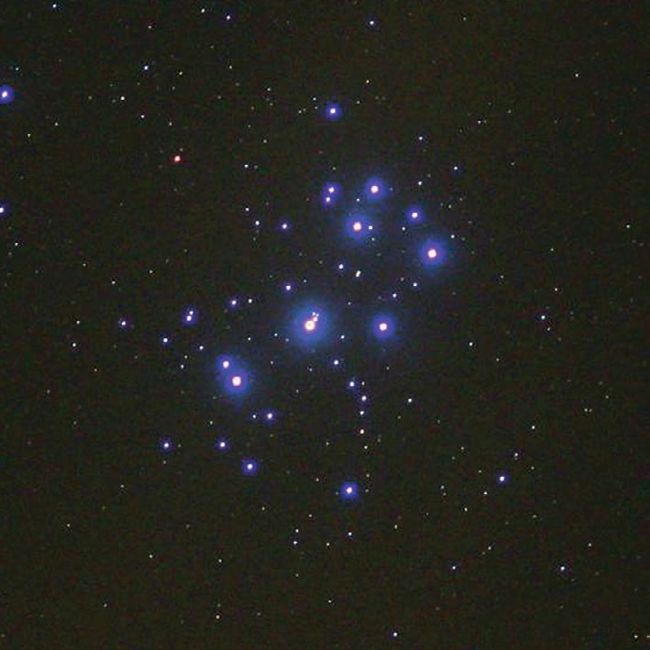
© Stuart Atkinson
Learn the constellations
You can use smartphone and tablet planetarium apps to help you to identify the constellations.
The International Space Station (ISS)
Observable: Throughout the year
On any clear night, countless artificial satellites can be seen drifting slowly through the constellations, looking like faint stars. The International Space Station – a crewed international laboratory orbiting high above the Earth – is much brighter, and can sometimes shine almost as brightly as Venus as it arcs gracefully across the sky from west to east.
When people hear the term ‘astronomer’, most automatically picture someone peering into a telescope. But you don’t need a telescope to see many amazing and beautiful things in the night sky. You can see many of the wonders of the universe using just your own eyes, or a pair of binoculars.
The telescope has allowed astronomers to see the planets of our Solar System in stunning detail and observe stars, nebulae and galaxies so far away that their dim light has taken millions or even billions of years to reach us. Telescopes make such faint objects look bigger and brighter, but they are totally useless for observing the big things beginners start out looking for – the shapes, or constellations, the brightest stars make in the night sky.