HOW DOES YOURGARDEN GROW?
‘SAGE’ ADVICE FOR STARTING OR IMPROVING YOUR VEGGIE PLOT
BY JIM JEFFRIES
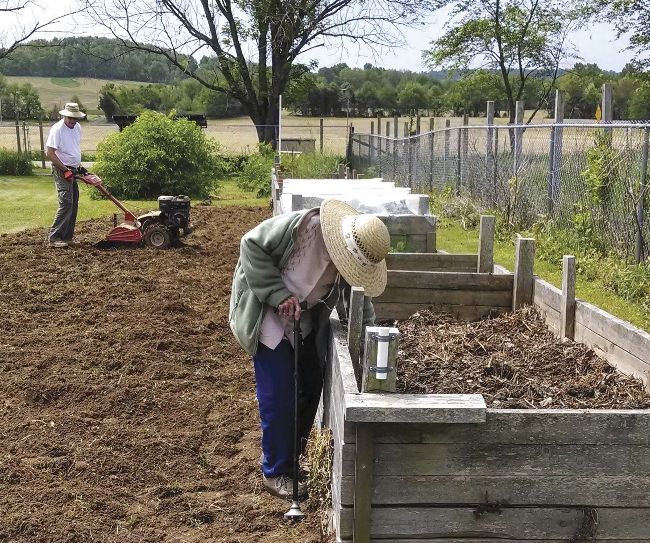
“Aunt Marjorie” checks the soil condition beneath the layer of composted leaves in one of the raised garden beds as the author tills up yet another area of the backyard for food production.
PHOTOS BY SUZY JEFFRIES
(
Author’s note:
This article is dedicated to Marjorie Miller, or “Aunt Marjorie,” as I knew her. Born in the 1920s, Aunt Marjorie lived through the Great Depression of the 1930s and the government-ordered food rationing in the United States during World War II.)
Home gardening was crucial to Aunt Marjorie’s survival for much of her life and was ingrained in her soul over her 90 years on this Earth. I was more than fortunate to be able to absorb a small fraction of what she knew, and I’ll never be able to thank her enough for imparting a bit of her wisdom to me for the last decade or so of her life. I hope to pass on some of that wisdom in this article.
Producing your own food provides nutrition security in several ways:
• It prevents starvation.
• It reduces or eliminates dependency on outside sources.
• It avoids toxic chemicals applied to commercial food.
• It ends contamination in processing or preservation.
Produce grown in far-off places, especially those outside the United States, might have been raised using unsafe methods-possibly with hazardous fertilizers such as human waste. Every year, there are outbreaks of food-borne illnesses due to Escherichia coli (E. coli) contamination on leafy greens and other food items originating from sources both foreign and domestic. Chemicals applied to the crops in the form of pesticides can cause a vast array of diseases, including cancer and birth defects. Cross-contamination during handling and processing can cause life-threatening reactions in people with food allergies.
By growing your own food, you know exactly what’s in-and on-it.
At first look, growing plants to produce food seems simple; and, in fact it is, but there’s a lot that goes into a successful garden:
• Selection and preparation of the ground
• The timing of starting seeds and putting plants in the soil
• Nurturing tender, young plants
• Keeping weeds and pests at bay
• Harvesting the crops
• Preserving and/or storing the produce
From the first step, there are many wrong turns that can be made, and there’s often frustration and disappointment along the way. Unfortunately, many people, particularly first-time gardeners, give up before the first pepper is picked.
“AT FIRST LOOK, GROWING PLANTS TO PRODUCE FOOD SEEMS SIMPLE; AND, IN FACT IT IS, BUT THERE’S A LOT THAT GOES INTO A SUCCESSFUL GARDEN …”
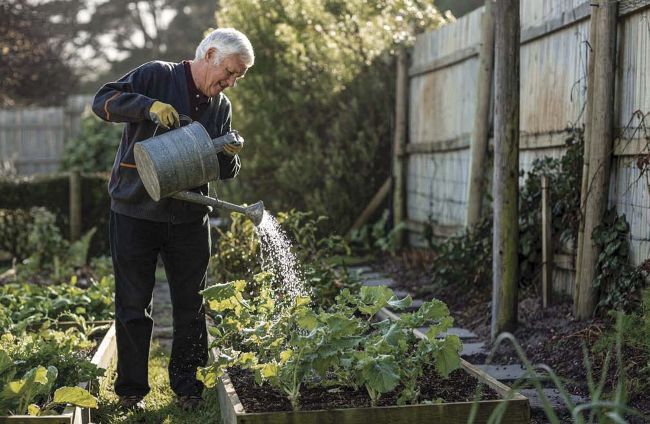
Raised garden beds are often easier to maintain than typical in-ground gardens. They can be extremely productive.