UPDATING STAIRS
Turn this practical and structural element into a stand-out design feature, with Lindsay Blair’s tips on how to renovate your staircase
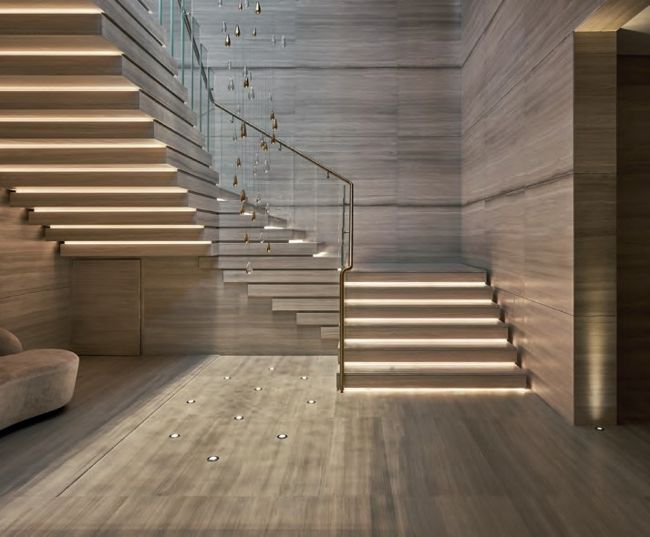
Above left: Illumination under the treads by John Cullen Lighting creates a floating effect and highlights the design of the stairs, while uplighters set in the floor add ambience
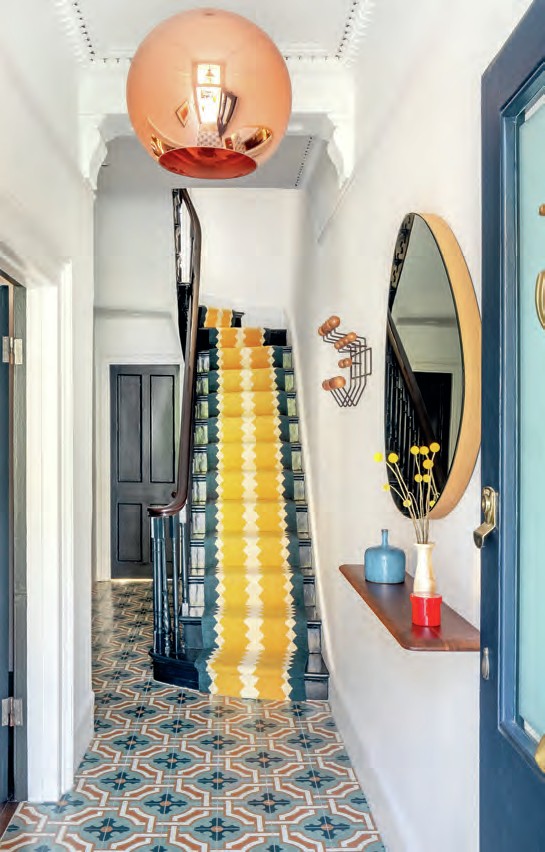
Above: A colourful runner can add personality to a renovated staircase.Handwoven wool Amulet Runner, in Safari yellow, from £385 per metre, Sophie Cooney
The centrepiece to your home and often one of the first things to be seen when entering, the stairs not only serve an integral functional purpose, but also an important visual one. While updating old or poor performing stairs may be necessary for safety and your household needs, it’s worth considering how the style could reinvigorate your hallway.
First assess your stairs. Is your property listed? If so, seek advice from your local planning authority before you do anything else. If not, look closely at the condition and check for any damage or weak spots. It’s useful to have an idea of what you’d like to do. Will the current stairs take the level of renovation you want? Period properties with wooden staircases can usually be given a new lease of life on a DIY basis, while you may also look to replace treads and the balustrade for something more modern, or a period replica. For a total overhaul, it’s important to engage a specialist early, weigh up the pros and cons of ripping out and starting again, and carefully consider the costs and your budget.
Clue up on regulations
No matter whether you’re restoring, making over or totally redesigning your staircase, it’s worth familiarising yourself with the legalities. Part K of the Building Regulations sets out the rules new or significantly altered stairs must meet:
● A minimum tread depth of 220mm, measured horizontally between the vertical riser or nosing.