Lovechild of the Haçienda
FELIX ROWE
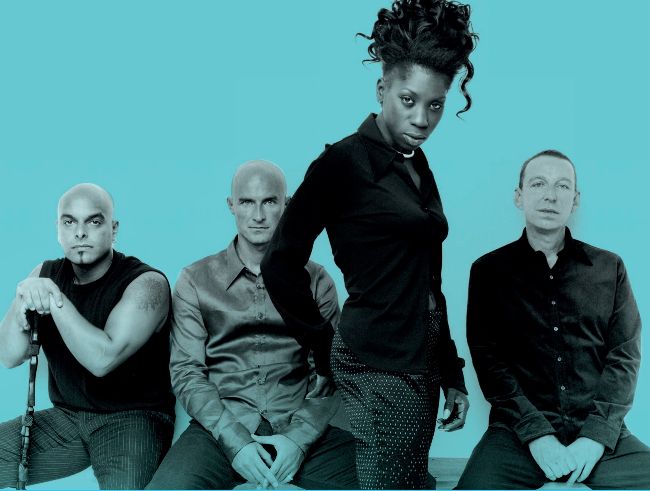
From left to right: ‘Shovell’, Paul Heard, Heather Small and Mike Pickering
In the early 90s, a band exploded out of Manchester with attitude, anthems and a voice that defined a generation. Building on the city’s rich musical heritage, from the Buzzcocks to the Roses, they would reign over the decade, notching up a string of hits that were screamed back at them at arenas, stadiums and even a Glastonbury headline slot. If the act that first springs to mind begins with an ‘O’, think again. M People’s résumé includes 11 million sales, two BRITs and the Mercury Prize. A permanent fixture in the UK charts throughout the 90s, they even topped the US Billboard Dance Chart.
Looking back isn’t something that comes particularly naturally to founder Mike Pickering, but then he hasn’t really had the chance. M People is but one chapter in a colourful career that spans from Haçienda DJ and Factory Records’ Latin-house outfit Quando Quango, to prodigious A&R man, whose many signings include the Happy Mondays, Kasabian and Calvin Harris. Pickering’s career has been forged on pressing onwards, forever chasing the next buzz. He wasn’t just around at the birth of the UK clubbing scene; he was the midwife. Becoming a heritage act that emerges every three years for another a victory lap doesn’t appeal. He was notably absent at M People’s triumphant reunion shows in 2012 and 2013.
Mike’s songwriting partner, Paul Heard, has enjoyed an equally varied career, first on the Acid Jazz label, and now an in-demand television and film composer; he even scored a No.1 in 2011 with Wretch 32. The Londoner recalls M People’s early days, hooking up with Mike through a mutual friend at Manchester’s iconic Haçienda club. Those heady nights out would soon filter back into their creative endeavours. “Mike was DJing,” explains Paul, “not just there, but in Renaissance, then Cream and all those clubs, so it was just a natural reflection of what was going on. It massively influenced the tracks we were writing: the euphoria, the feeling of…positivity and creativity coming out of the clubs at the time.”