SOCIAL ANXIETY
COME OUT OF YOUR SHELL
Social anxiety is more than just being shy. It’s a phobia born out of our evolutionary past. But that raises a puzzling question: why do so many of us fear human interaction when we’re supposed to be the most sociable species on the planet?
by DR DEAN BURNETT
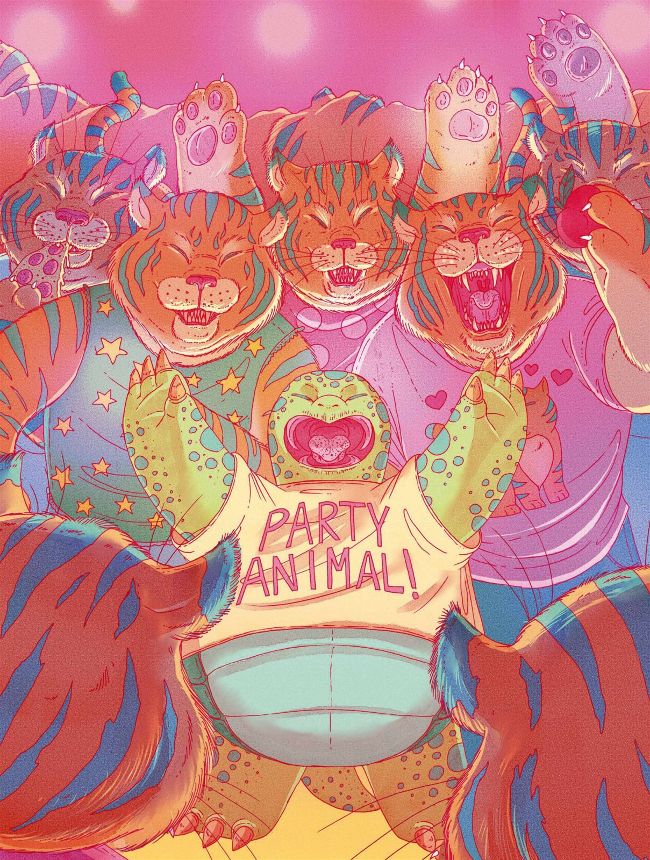
ILLUSTRATION: ELENA BANSH
Many people are afraid of ma ny things.
For good reason. But many people are afraid of things wit hout good reason. Phobias – irrational fears such as a fear of spiders or enclosed spaces – are com monplace and familiar. They’re deemed irrational because the average person in the modern world has little or nothing to fear from such things.
Unfor tunately, the instincts and subconscious processes that inf luence and guide our thinking and behaviour run on much older programming. We instinctively fear certain things because we evolved in environments where they were a threat. So much so that ancient fear instincts, expressed in modern, rational contexts, can disrupt mental functioning and wellbeing. Hence phobias are anxiety disorders.
But while familiar, a rachnophobia and claust rophobia a ren’t the most common phobias. Public speaking, talking on the phone, meeting new
people, asking someone out… So many people are irrationally terrified of these objectively harmless actions that social anxiety isn’t just the most common class of phobia, it’s one of the most common mental disorders.
But why? Humans are arguably the most sociable species ever. So if we’re so friendly and keen on interaction, why do so many of us fear this exact thing? To answer, we need to understand why humans are so social in the first place.
Humans a ren’t the most impressive species. We’r e not the st rongest orfastest. We can’t fly, we don’t have armour or weapons, or even camouf lage. And yet we’ve managed to completely dominate the planet anyway. How?
“THE HUMAN TENDENCY TO FORM TRIBES IS WHAT HAS MADE US SO SUCCESSFUL”
THE SECRET TO OUR SUCCESS
It’s because we’re social, cooperative. A wolf or sabre-toot hed tiger could easily dispatch a single human. But five people, all working toget her? No chance. The human tendency to form harmonious, cooperative tribes is what has made us so successf ul.
And if your species’ success is due to cooperation and cohesion, then that affects how you evolve. The ability to interact with ot hers, to understand, anticipate and coordinate with them, to please and reassure them, even to manipulate them via deceit (it’s not all positive), these qualities led to success in primitive human societies. And the most successf ul individuals get to reproduce more, so these qualities became widespread.