GLOBAL EYE
Severe drought helped bring about a ‘barbarian’ invasion of Roman Britain
ARCHAEOLOGY
WORDS OWEN JARUS
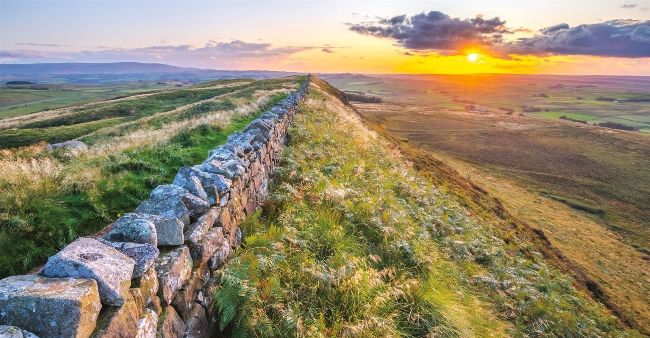
A rebellion of Roman troops in 367 CE at Hadrian’s Wall was followed by an invasion of Roman Britain by three different ‘barbarian’ groups
A severe three-year drought helped bring about a ‘barbarian’ invasion of Roman Britain in 367 CE, a new study finds. In that year, Roman troops stationed at Hadrian’s Wall on the empire’s northern frontier rebelled, and three different ‘barbarian’ groups invaded Roman Britain, with the Picts attacking northern Britain from Scotland, the Scoti invading western Britain from Ireland and the Saxons invading southern Britain from the European continent. The rebellion and attacks weakened the Western Roman Empire’s hold on the province of Britannia. The violence led to the capture or deaths of senior Roman commanders, and some Roman soldiers are said to have deserted to join the ‘barbarians’. Roman historian Ammianus Marcellinus, who lived circa 330 to 395 CE, claimed in his book Res gestae – Latin for ‘things done’ or ‘things that happened’ – that the three groups conspired with each other against the Western Roman Empire, and other historians have called the events the ‘Barbarian Conspiracy’. While the Western Roman Empire, which included parts of Western Europe, Central Europe and North Africa, regained control of southern Britain in 369 CE, they were forced to abandon it permanently in 410 CE.