Game console
Steam Deck OLED
Management is overjoyed: “Take an old product and slap a new badge on for more money?” Tyler Colp likes his job too much to correct them.
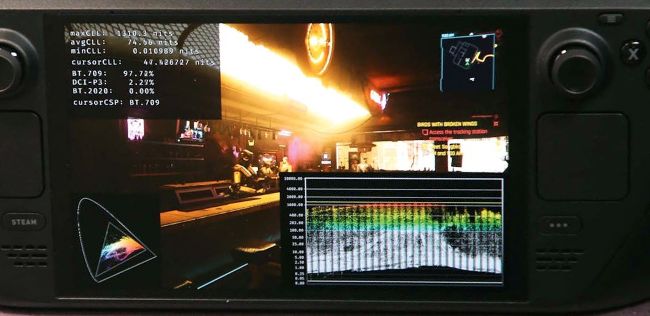
Feel the warmth of every candela from the 1,000cd/m2 HDR display!
SPECS
OS: SteamOS 3.5 APU: AMD Sephiroth Process: TSMC 6nm CPU: Zen 2 Clock: 2.4GHz (3.5GHz boost) Cores: 4
Threads: 8 GPU: RDNA 2, 8 compute units Mem: 16GB LPDDR5-6400 HDD: 512GB (option 1TB) NVMe SSD, microSD Screen: 7.4-inch OLED, 1280x 800, 90Hz HDR: 1,000cd/ m² (600cd/m² SDR)
Comms: Triband Wi-Fi 6E (ax) 2x2, Bluetooth 5.3 Battery: 50Whr TDP: 4-15W Size: 298x117x 49mm, 640g
If the Steam Deck was a beta, the Steam Deck OLED I is your finished form. It’s not a sequel, not a beefed-up ‘pro’ version, and not a major redesign. You can’t even tell the difference between the old model and the new one when you sit them next to each other – save for the new orange accents. The Steam Deck OLED, which replaces most of the current models at the same price, is the ultimate form of one of the best handheld gaming PCs available.
The differences between the original Deck and the Steam Deck OLED are largely invisible, but they refine what was already a fantastic way to play PC games wherever you want. There are clear improvements with its most crucial stats: it has noticeably better battery life, more storage, a sharper, brighter screen, and weighs a tad less. But there are surprises, too: the touchscreen is way more responsive, the thumbsticks have an improved grip, and the bigger fan purrs much softer than before. You won’t want to go back to the original Steam Deck now. You don’t hate it, but the OLED captures the promise of the original in ways you didn’t initially expect. And while you don’t think there’s a sensible reason to upgrade if you’ve already bought one, the Steam Deck OLED cements Valve’s device as the most accessible handheld gaming PC you can buy right now.