CLOCK-SIGNAL
How to emulate an Acorn Electron
Les Pounder takes us back to a time when bedroom coders ruled the world and playground battles were fought for your micro.
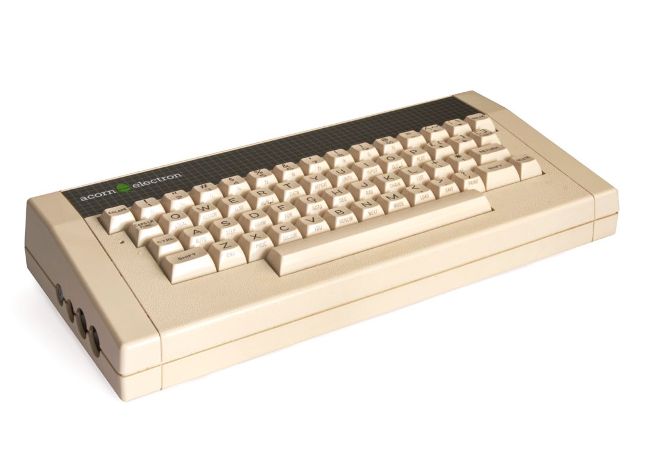
The Acorn Electron may have been Acorn’s attempt to fight back against Sinclair, but to many people it’s where they cut their teeth in programming.
Credit:https://github.com/TomHarte/CLK
OUR EXPERT
Les Pounder is associate editor at Tom’s Hardware and a freelance maker. He blogs about hacks and makes at bigl.es.
T he BBC Micro, made by Acorn Computers, may have been its most famous machine, but for most 1980s home users the price tag was just a little too high. A budget alternative was needed to compete against the Spectrum. In August 1983 the Acorn Electron was introduced to the world, with 32KB of RAM and a Synertek SY6502A CPU clocked at 2MHz, specifications similar to the BBC Micro Model B.
The Acorn Electron was a successful machine, selling around 200,000 units over its lifetime, but it never really put up much of a challenge. But to many devoted fans the Acorn Electron was their route into computing.
The BBC Micro dominated the 1980s education, semi-professional and hobby markets. This author remembers being introduced to the “Beeb” by their father’s friend who was an electronics engineer. But the price of the BBC Micro meant that they had to “make do” with a Commodore 64 instead.
The Acorn Electron was unofficially announced in 1982, by Acorn co-founder Hermann Hauser responding to a question in an issue of Popular Computing Weekly.
The question asked was if the ZX Spectrum was hurting sales of the BBC Micro. Hauser’s response was that the company was already working on a new machine, saying that, “Later this year Acorn will release a new computer, priced under £200 that will compete and outperform our competition.”
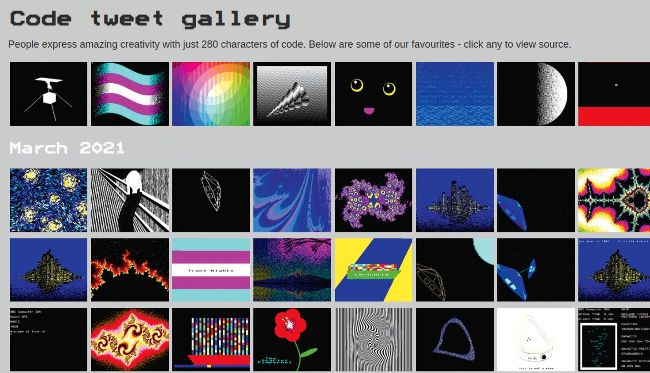
BBC MicroBot is an awesome resource of knowledge and inspiration for BBC BASIC projects, and writing BASIC via a tweet is a worthy challenge.
The idea of the Acorn Electron came from Chris Curry, who saw that Acorn was missing out on the gaming market, which was dominated by Sinclair and Commodore. The Acorn Electron saw Acorn reduce the number of chips used inside the machine, from 102 to just a dozen. An example being the single chip that powered the audio, video and IO ports. The Electron is also missing Mode 7 graphics, a high-resolution mode for text that was used with CEEFAX to transmit live data from the BBC. Ultimately the smaller chip count meant a smaller mainboard, which reduced its costs and the size of the machine. This also meant that the Acorn Electron was missing many of the expansion features present on the BBC Micro. There was no Econet networking, expansion slots, RS423, analogue, printer and user port. Extra features could be added, but you had to pay a little extra for the Plus 3 add-on that introduced a 3.5-inch floppy disk drive.