Reptile obstetrics
What are the potential problems that that can arise in the case of a female reptile, when she is laying eggs or giving birth? Here are the key signs that can indicate an impending problem which you need to be aware of, and what can be done, in terms of treatment. The risk is present – even in the case of female reptiles being kept on their own, and should not be underestimated as veterinarian Dr Tariq Abou-Zahr MRCVS explains.
Introduction
There has been a boom in reptile breeding over recent decades. Whereas the majority of animals offered for sale used to be wild-caught, nowadays the majority are captive-bred. This can only considered a very positive step as far as the hobby is concerned. Of course, with an increase in captive breeding, there has also been an increase in the incidence of health-related reproductive issues in reptiles seen by exotic animal veterinary surgeons.
This article will examine a number of the obstetrical conditions commonly encountered, and some of the ways around them. It is worth considering the possibility of the likely problems that can occur, in advance of pairing up the reptiles, so as to ensure that plans are in place just in case any potential complications do arise during this period.
As with so many health issues that can occur in reptile keeping, husbandry problems are a significant underlying cause of obstetrical issues in our animals. This is something that is often not appreciated. The provision of adequate nutrition, which for many insectivores should begin with the gut loading of feeder insects by providing a suitable diet rich in key nutrients, is vital. Adequate supplementation then applied immediately prior to using such insects, and sprinkled on vegetable matter in the case of herbivorous species, will also help to prevent hypocalcaemia (low blood calcium levels) developing, which is a common cause of problems.
Similarly, the provision of sufficient full spectrum UVB lighting using a lamp of an adequate percentage output for this purpose is equally vital. This must be sited at the recommended distance from the animal and replaced at the recommended intervals, so as to prevent problems that can arise from a deficiency of Vitamin D3, which is vital for mobilising calcium stores in the body in advance of egg-laying, quite apart from controlling the overall levels of this vitamin in the body. The choice of substrate is also another very important consideration for the prevention of obstetrical problems.
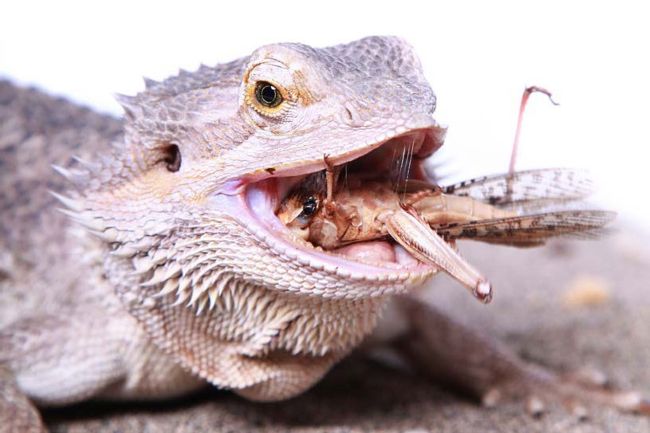
The nutritional value of live food is inadequate without using supplements, especially when seeking to breed reptiles.
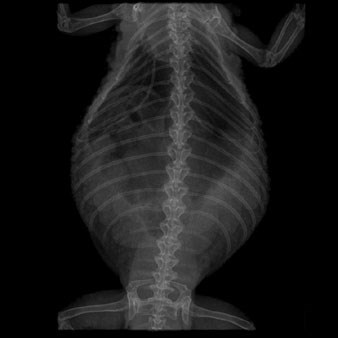
It appears that this female bearded dragon is suffering from hypocalcaemia, with the eggshells – as outlined in the oviducts running down the sides of her swollen abdomen – not being properly mineralised. They would otherwise be more clearly defined in this X-ray.
Image courtesy of the author.
Egg binding
As a general rule, egg binding (or dystocia) cases can be divided in two distinct groups, known as obstructive dystocia and non-obstructive dystocia. In cases of obstructive dystocia, there is a mechanical obstacle that prevents either the eggs or live young from being passed through the oviduct or out of the reptile’s body via the cloaca. The problem may be associated directly with the egg or foetus itself, or it could be a maternal problem.