ROAD TEST No 5581
Cupra Born
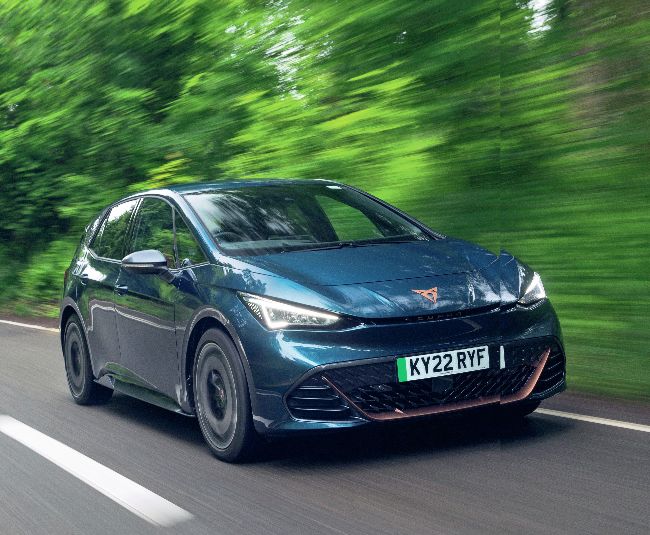
Cupra’s first EV looks rather like a Volk swagen ID 3. Is the difference in the driving?
MODEL TESTED 204 58KWH V3
Price £38,390 Power 201bhp Torque 229lb ft 0-60mph 6.7sec 30-70mph in fourth na Economy 3.8mpkWh CO 2emissions 0g/km 70-0mph 47.2m 36
AUTOCAR.CO.UK
6
JULY
2022
PHOTOGRAPHY LUC LACEY
We like
• Impressive efficiency • Well-set-up chassis • Roomy and comfortable interior
We don’t like
• Poor infotainment system • Should have been more different from the ID 3 • Expensive compared with rivals
The past few years have seen a wealth of new car brands spun off their parent companies. Volvo begets Polestar, Hyundai begets Genesis, Seat begets Cupra and Citroën begets DS.
But despite all the marketers and product planners in the world, the launches of these brands have seemed strangely off-kilter.
Polestar, pitched as an electric brand, was launched with a plug-in hybrid. Genesis is also supposed to be modern and high-tech, but its first four cars have been extremely traditional in chasing the German manufacturers.
And then there is Cupra, which has existed since the 1990s as Seat’s performance brand. Its marketing doesn’t mention it very often any more, but the name is actually a contraction of cup and racing, to reference Seat’s activity in rallying with the Ibiza kit car in the 1990s.
Today’s Cupra still serves to make performance versions of Seats, but its remit has widened to be a sportier, sub-Audi premium brand. It’s getting rather crowded within the Volkswagen Group, so Cupra really needs an identity of its own.
It started forging that personality with the Formentor, but its second model, the electric Born, bears an uncanny resemblance to the Volkswagen ID 3. Does the Born sufficiently differentiate itself from the VW and does it tell us any more about what Cupra stands for? We find out with the help of a high-spec 201bhp version.
DESIGN AND ENGINEERING
★★★☆☆
That the Cupra Born looks so similar to the VW ID 3 is as unsurprising as it is disappointing. Like its German relation, it is based on the shared MEB electric architecture. The platform has been around for a few years now, but VW Group brands have been struggling to give the cars based on it a distinct identity.
The larger VW ID 4, Skoda Enyaq iV and Audi Q4 E-tron all have a similar silhouette and the same is now becoming true for the smaller hatchback-sized cars.
It is an issue the designers have acknowledged and they have promised the supermini-sized Cupra Urban Rebel will look “radically different” from its VW and Skoda siblings. But that’s not due until 2025.