BUILDING WITH
STRUCTURAL TIMBER
Whether you’re opting for timber frame, SIPs, oak frame or a combination of build solutions, a timber structural system offers design flexibility, energy efficiency and cost certainty
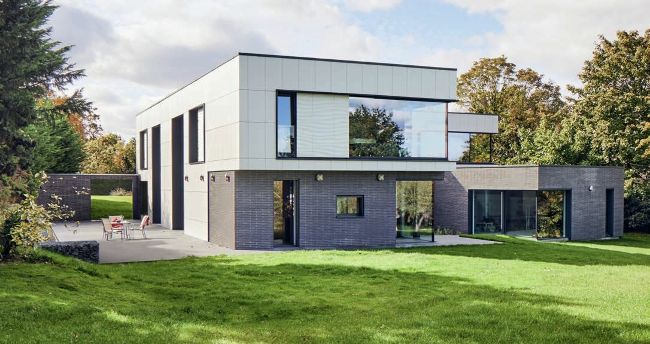
Baufritz delivered this stunning 441m2 self build in Hertfordshire as a turnkey package.
Timber has been used as a material for building houses for 100s of years – and you only have to look at the UK’s many gorgeous Tudor examples still standing to understand the durability of wooden homes. These days, technological advancements in offsite manufacture means modern timber homes offer high performance, speedy build times, design flexibility, cost certainty and sustainability, making it a popular self build option. Read on as we delve deeper into the three main structural timber options and their unique benefits.
TIMBER FRAME
This system usually comprises pre-insulated closed panels that are cut in a factory and then transported to site to be assembled. It might use rigid insulations or be filled with blown-in materials, such as cellulose, woodfibre or mineral/glass wool products. If you want to increase the specification, you can add an extra layer of insulation internally or externally. Alternatively, some manufacturers can provide timber frames as panels left open on one side, for your build team to install the insulation on site.
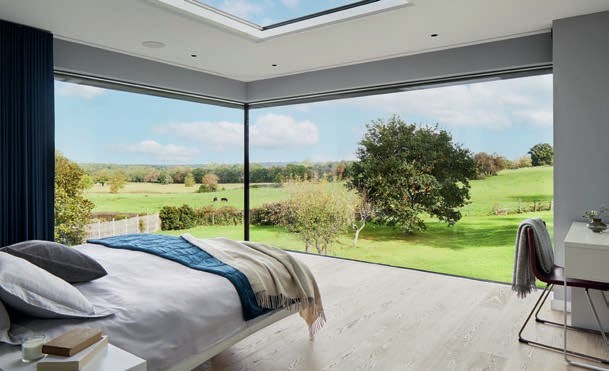
The shell was erected on site in a few days and the fit-out completed in eight months
The benefits
Your supplier is effectively a one-stop-shop. They’ll take architect’s drawings and translate them into a buildable, engineered solution. Timber frame lends itself well to most shapes and features – though curved walls can require some lateral thinking. “If it can be drawn, it can be built,” says Simon Orrells, MD at Frame Technologies. Some companies may also have an in-house team that can work with you to design your home from scratch.
Timber frames are largely made in a factory-controlled environment, so you can be assured of quality out of the box. Plus, you can agree the insulation and airtightness specification at the start and gain confidence that there won’t be any performance gap between the plans and the finished house. So, this is a great solution for those looking for a low-energy or even a central heating-free home. Timber is considered a zero-carbon build system as the trees trap more CO2 in their lifetime than is emitted through the build. Look out for the FSC label.