PROJECT MANAGEMENT
Scheduling first & second fix work
Tim Doherty takes a look at what’s involved in planning the key stages of your new home’s internal fit-out – from getting the infrastructure in, all the way to final finishes
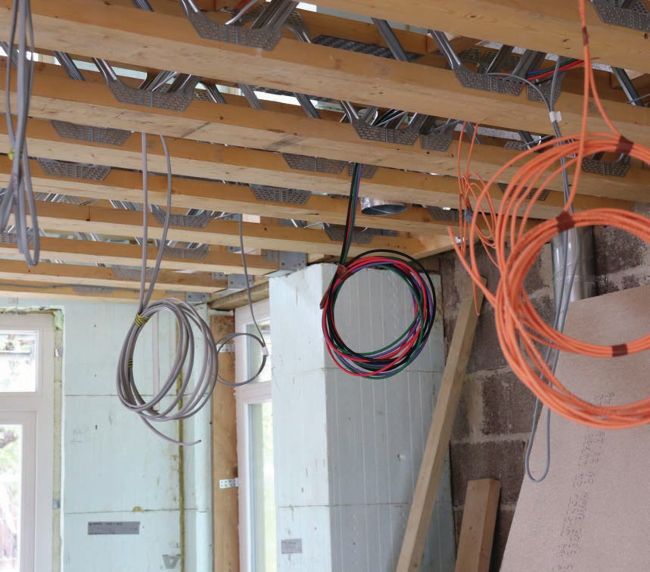
Opting for open joists, such as these metal-web versions, will give your plumber, electrician and other installers maximum access to install cabling, pipes and ducting – speeding up the work. All the images in this article were taken during construction of Build It’s Self Build Education House (www.
buildit.co.uk/ourhouse). Once the shell of your project is wind and watertight, it’s time to get started on installing the elements that will ultimately turn your house into a home. These internal works are collectively referred to as first fix (essentially the infrastructure prior to the walls being plastered) and second fix (when all the visible fittings and products will be installed). Programming these stages effectively is key to successfully managing a build to completion – so here’s what you need to know.
What do we mean by wind and watertight?
This term can sometimes be a bit misleading, as wind and watertight (aka weathertight) stage is often achieved well before the windows and external doors have been installed (with temporary polythene sheeting tacked over these openings, for instance). Its real meaning is to denote the stage where the building structure has been erected – be it timber frame, SIPs or masonry construction – and the roof covering has been applied.
Adding weight to the roof by installing the covering over the felt and battens is important in helping the building to settle, particularly with timber frame systems, before making progress on the interior. So, for the purposes of this article, imagine that the main structure of your new dwelling is fully erected on site, the roof tilers are just finishing their work and the scaffolding is still in position around the building’s exterior.
Who’s involved in first and second fix work?
We separate these two stages of internal fit-out because you will have multiple trades working internally who will need to make more than a single planned visit over the course of your build. The most obvious operatives who will separate their work in this way are the carpenter, the electrician and the plumber.