HOW TO HEAT A SMALL HOME
Eco heating expert Nigel Griffiths takes a look at what tech setup works in smaller properties
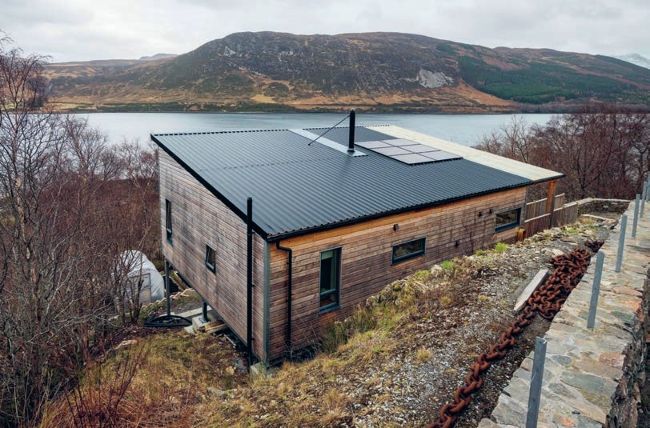
The low pitch of Alice and Moz Mikietyn’s 70m2 property in the Scottish Highlands is perfect for the solar thermal panels, which power the domestic hot water (DHW). The only space heating source is a stove in the living room
JOHN PAUL
The most sustainable way to heat anything is not to have to heat it at all! Small eco homes built to levels of insulation and airtightness beyond the Building Regulations will have very low heat demand. The warmth from people living in it – our bodies, our washing and cooking, plus the appliances we use – can be sufficient to heat many properties in all but the coldest weather. To some degree this also depends on the location – ie how exposed the house is and the amount of windows on the southern facade that can deliver solar gains in winter.
Even new homes simply built in accordance with the minimum requirements of the regs will have very low heat demand these days. So, the simple answer to the question of how to warm a small new home efficiently is that it doesn’t really matter, as the energy needed will not cost much and the impact on the environment will be minimal whatever fuel or system is chosen.
Existing, older houses will have a higher heat demand, so in this article we’ll explore all the heating options and note what is particularly applicable to new or to existing homes.
What are you heating?
Before we look at the key system options, we need to first think about what it is exactly that we’re heating in our homes. We tend to focus our thoughts on energy use around heating the living spaces. But as houses (and appliances) have become more thermally efficient, the highest demand for energy could well come from the water we use for showering and bathing, known as domestic hot water (DHW).