DESIGNING YOUR TIMBER FRAME HOME
Building with structural timber could be the ideal route to a comfortable and st ylish home that balances excellent performance values with great aesthetics. Erika Chaffey shares the key considerations to specif y the right design
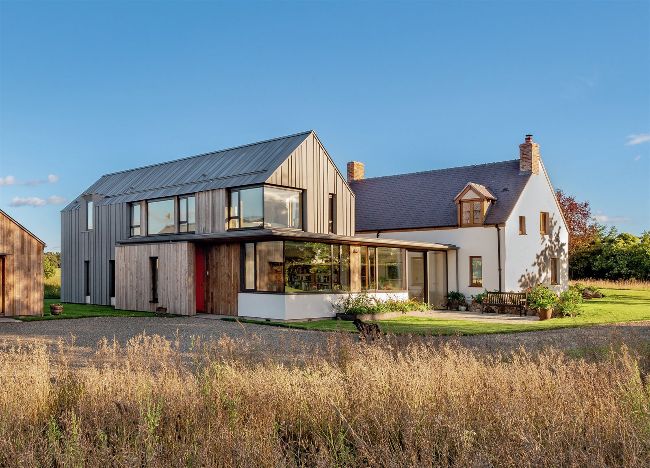
This sympathetic build by Lowfield Timber Frames is connected to a grade IIlisted cottage and features 120mm of factory-fitted PIR insulation
Timber frame construction is a popular route for self builders thanks to its flexibility, sustainability and ability to meet high levels of energy efficiency. Whether you’re drawn to the impressive build speeds, ease of creating open plan living spaces and vaulted ceilings, or the ecofriendly credentials of this construction method, you’re certain to find a system that meets your project goals. Designing a timber frame home involves a range of important decisions, from finding the right supplier to specifying those wow-factor features. I’m guiding you through the key steps for a successful project.
Finding a supplier & designer
In the early stages of any project, it’s important to assemble the right team. As well as your timber frame supplier, this includes designers who can translate your ideas into reality. “We always recommend getting your timber frame provider involved in the project as early as possible,” says Simon Orrells, managing director at Frame Technologies. Your chosen specialist can offer valuable input during the initial stages of your project – helping you meet Building Regulations and address potential planning challenges.
There are different ways to approach the design process. Some timber frame suppliers can take on the entire architectural and engineering process via their in-house or partner designers. This would typically be a house shell package, where they supply and erect the superstructure of your home – but some companies can deliver the whole build for you on a turnkey basis, offering a streamlined journey from concept to a buildable, high-quality home. Alternatively, most will also be happy to work with an independent architect of your choosing, who can add their own flair and creative input. Bear in mind that your design will then need to be adapted to suit the structural system at the technical design phase. “If you opt for a specialist timber frame architect,” says Mike Hope, managing partner at Roderick James Architects, “they can advise you on a supplier to suit your project, location and budget.” When selecting your frame supplier, it’s important to look beyond the price tag. “Get detailed costings and understand exactly what is included, excluded and what services are being offered,” advises Helen Turner, commercial director at Turner Timber Frames. To build confidence in your chosen company, ask to visit active build sites or factories, meet the experts to discuss your plans in person and speak with previous clients. Plus, look for accreditations such as the STA (Structural Timber Association) Assure logo, which signifies a company has been independently audited for quality – this kind of assurance can also help you to obtain relevant warranties and insurance down the line.