USING ROOFLIGHTS EFFECTIVELY
Architect
Julian Owen
explores the different ways you can brighten your home with overhead glazing, and the key factors to note for a successful setup
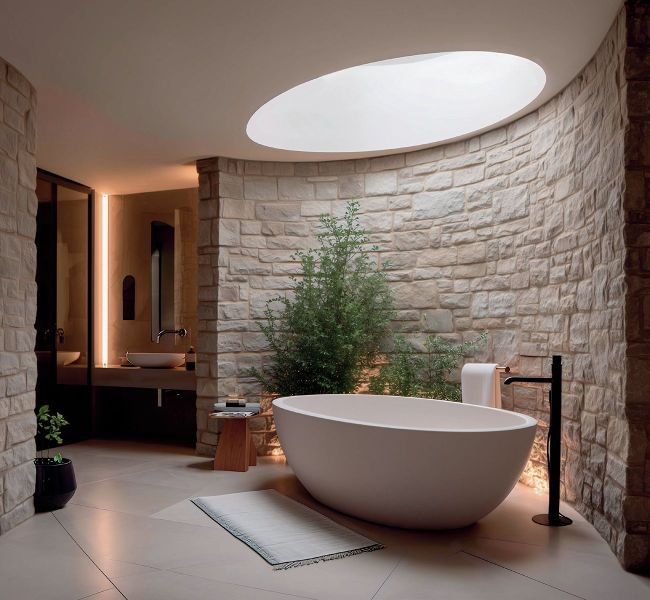
Who says a rooflight has to be rectangular? This made-to-measure aluminium fixed circular design by Eos Rooflights adds a stunning contemporary look (eosroof
lights.co.uk)
High levels of daylight will make almost any room in a home feel more peaceful and relaxing.
It’s a free gift from nature that goes a long way to help your design achieve that elusive wow factor because, when skilfully deployed in a space, it can make a potentially ordinary area feel a little more special. It also offers mental health benefits, helping to regulate our sleep patterns by boosting light levels to help us wake up in the morning. It can help those who suffer from the effects of seasonal affective disorder (SADs), which is triggered by the lack of sun in the winter seasons. Not to mention, natural light can reduce electricity bills as there’s less need for artificial illumination. So, how can they be implemented into a home’s design for maximum impact?
Designing for daylight
The quality and effect of sunlight can be made more pleasing if it enters the room from a variety of directions, for example by placing windows on two or more sides, and especially in the ceiling. This has a fairly subtle but measurable effect on a person’s subconscious. It’s where toplight has an important role to play, especially if the location of the windows is partially restricted for practical reasons. What’s more, overhead glazing typically lets in at least three times as much light compared to a side window, which is mostly reflected from the ground or the surrounding buildings and landscape.