OPEN VS BROKEN PLAN LAYOUTS
Architect how to get the right balance between large shared spaces and private, snug rooms Opinder Liddar reveals
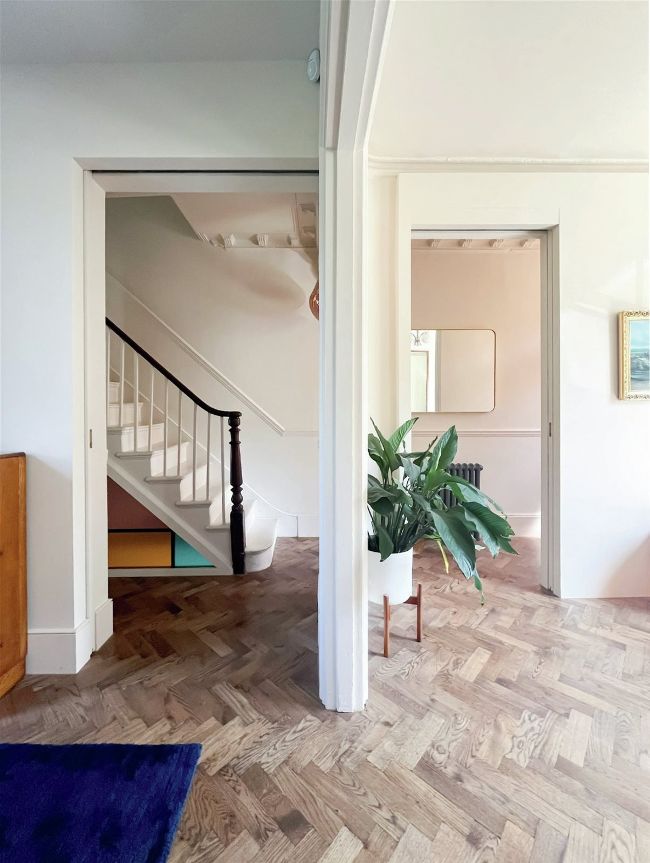
Top & above: Designed by William Tozer Associates (www.
williamtozerassociates.com) this raised kitchen space neatly zones the open plan kitchen-diner, with a central island counter further dividing up the space. A rooflight illuminates a smaller, casual eating area. Elsewhere, a series of discreet pocket doors provide flexible living through the rest of the plan
LUKASZ WIELKOSZYNSKI
Until the 1990’s, most housing in this country tended to have separate rooms for different functions. If you’ve bought an older property that hasn’t been modernised, you may sense this as you walk through the house and wonder how people lived like this for so long. The way we build our homes, and people’s lifestyles, continually evolve over time, meaning what was considered normal years ago is now quite different. Here, I’m taking you through the range of possibilities for the room layout in your own design, in order to meet your living needs, preferences and to provide ample natural light throughout your home.
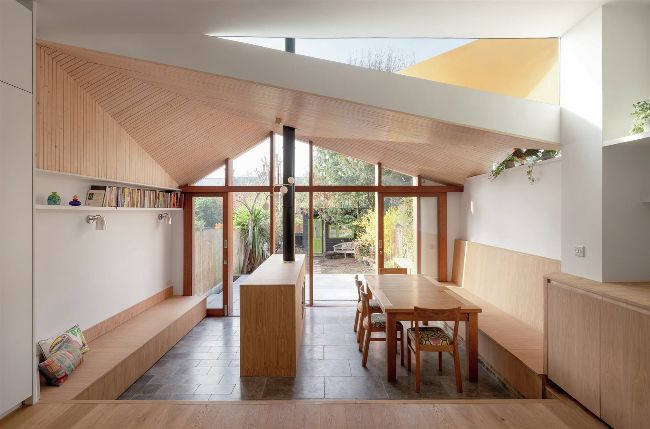
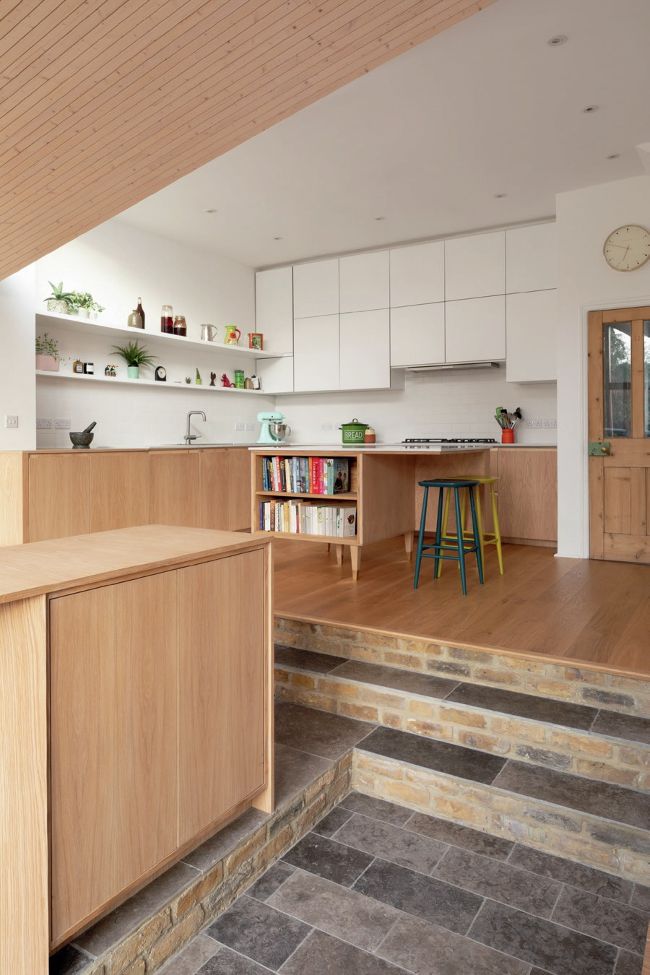
Above & inset:
This unique extension by Turner Architects (www.turner architects.co.uk) houses an openplan kitchen diner that benefits from full-height glazing for a great indoor-outdoor connection and light flow. The room is neatly divided up by a central unit that features a woodburner and hidden TV, creating a snug zone within the space. The kitchen is elevated above the living areas, and uses the same timber flooring found throughout the rest of the homeADAM SCOTT
The importance of a good layout
While for many years having a series of separate rooms for different functions was the accepted way to live, you would often find that natural light levels inside these houses was poor and the layout did not make best use of all the available space, nor allow the social interaction that we often want in our homes today. The living room, dining room and kitchen would all be walled off from one another, and at best you might have found a set of double doors to link the living room with the dining room, or a small hatch opening from the kitchen. Each room had a very specific use and housing was often designed for practical purposes. The kitchen, for example, would have been considered purely as a room for cooking, and not as a social space for you to entertain guests or interact with family while preparing a meal.