Insulating concrete formwork
Could this construction method be the right choice for your dream self build home?
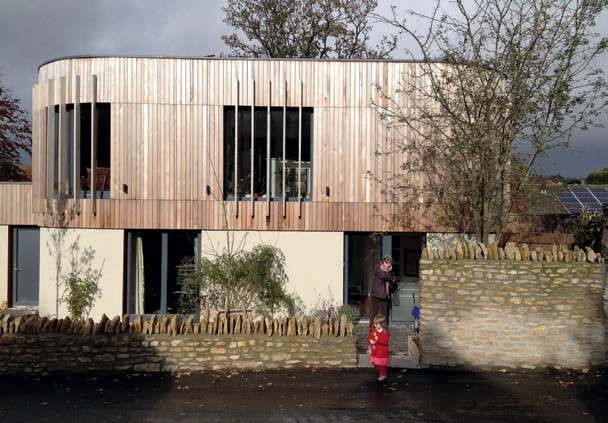
The Red House is an architect-designed home built with Nudura ICF. The street-facing elevation features a mix of timber cladding and render, with rounded corners echoing those of a listed building opposite. The house is so well insulated that the occupants enjoyed zero energy costs in the first year
Intuitive, quick and weather-resistant, with impressive thermal performance and excellent durability, insulating concrete formwork (ICF) offers a host of benefits. Small wonder, then, that it continues to gain traction for one-off home building projects. Here’s what you need to know if you’re considering ICF for your scheme.
How does ICF work?
This structural system is sometimes referred to as LEGO for adults. There are slight variations on the theme depending on the supplier you choose, but fundamentally building with ICF involves stacking a series of lightweight hollow blocks (usually of expanded polystyrene; EPS) with interlocking profiles to form your external walls. Steel reinforcement is inserted into the cavities, to the structural engineer’s design, and the formwork is then braced and aligned – ready to accept a pour of suitably-specified concrete.
A project goes up in storeys. So, you build foundations and floor slab first; erect and pour the ground floor ICF walls; get the first floor structure in place; and then crack on with the next storey. The concrete itself is placed in lifts, with the crew moving gradually around the building, to minimise pressure on the ties and bracing. The concrete must be carefully directed and vibrated to prevent voids forming, with particular attention to detail needed around structural openings and areas such as gables. Ultimately, what you’re left with is an extremely robust, solid and high performance structure with EPS insulation built-in.