Design details Bathroom tiles
Tiles aren’t just the practical choice for wet areas. They can also bring vibrant colour and pattern, and define the mood of the entire space – with something for all budgets, says Emily Brooks
Emily Brooks
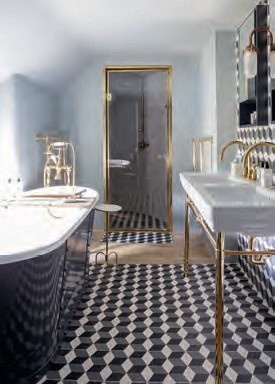
Gleaming brassware stands out against monochrome geometric cement tiles running along the floor and up the basin wall in this project by Gunter & Co. The tiles are from Mosaic del Sur
The distinct personality and individualism that’s fairly unchallenging to attain elsewhere in a home can occasionally fall by the wayside in the bathroom, because of the need to prioritise safe, easy-to-maintain surfaces and products. Using tiles is one of the simplest ways to create character while still attaining a really high level of practicality. The wide range of colours, patterns, textures and materials available means that near-enough any look is achievable, from minimal, architectural-style bathrooms to a warmer traditional ambience or the period flavour of a classic Edwardian washroom.
Your choice of materials will come down to aesthetics, budget and ease of upkeep. Natural stone and cement will need regular sealing, for example, while glass isn’t suitable for wet floors because it will become slippery. Porcelain and ceramic are top choices for price, straightforward installation and compatibility with underfloor heating – and also for the huge range of patterns and colours available. The development of inkjet printing has led to an explosion of lookalike finishes on ceramic and porcelain tiles, from slate to timber to rusty metal, opening up lots of exciting design possibilities.