Replacing windows
How can you tell whether your windows need changing and how should you go about it? Renovation expert Kate Sandhu takes a look
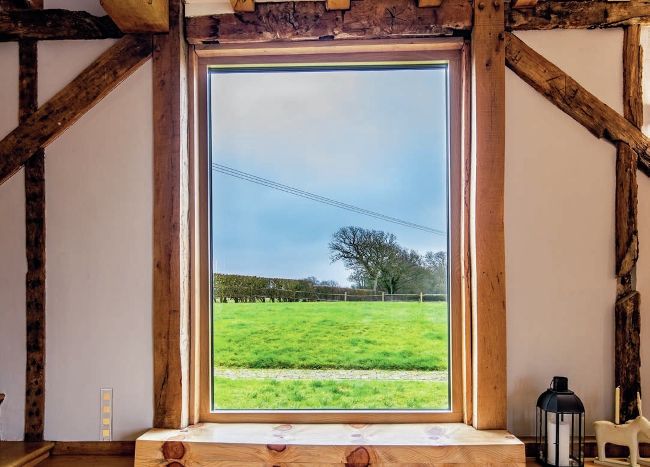
Internal timber framing completes this sleek alu-clad picture window by Norrsken (
norrsken.co.uk)
Windows are the backbone of any property. They make or break a house’s aesthetics, add value, help to sell a home and of course, if installed correctly, are energy efficient, reducing heating bills. So, it’s critical to get them right. If you’re tackling a renovation, knowing whether to replace windows isn’t straightforward and will vary by type, house and age. Some warning signs to look out for include:
● Your home seems hard to keep warm. Windows could be the culprit, so check whether they are noticeably draughty, letting warmth leak out and cold air in.
● Chips or cracks in your glass.
● Water leaking in.
● Condensation forming between sheets in your double glazing (essentially a window’s death sentence).
● The windows are struggling with basic functionality, for example, they’re difficult to open and close.
Do you need planning permission?
Typically, you don’t need planning permission in the UK to replace windows, as it falls under permitted development. There are, however, some exceptions:
● Listed buildings will need planning permission and specific listed building consent.
● Conservation areas (an area of special or architectural interest, affected by special rules) may need planning permission. Like-for-like replacements may be exempt, but always check with your local council.
● Rooflights protruding over 150mm beyond the plane of the roof slope or above the roof’s highest point.
● Fitting an upper-storey side window that isn’t a frosted version and can be opened.
● The addition of new bay windows.
If you are creating a new window rather than replacing one, this tends to be more contentious, especially if it overlooks neighbours. You will also need to apply to local building control if the opening is new or enlarged. It is always prudent to check local regulations, which you will find on your local council’s planning website.
Getting the right look & functionality