AIR SOURCE HEAT PUMPS
What does a good installation look like?
Nigel Griffiths explains how to make sure your renewable setup runs as efficiently as possible
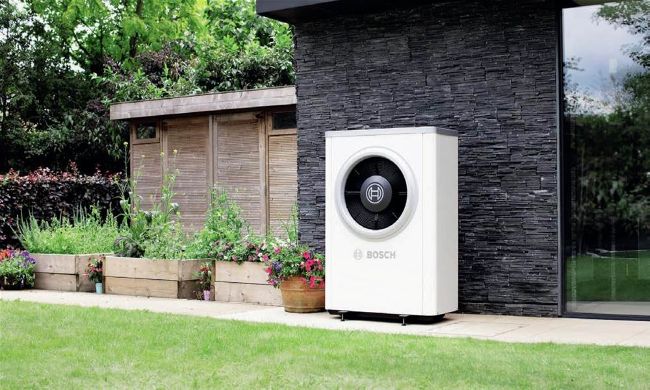
Above: The 700iAW air to water heat pump from Worcester Bosch is suitable for new builds and well-insulated renovated houses. It works for small to large sized properties
Heat pumps are the hot topic of the moment. The government thinks the future of domestic heating is electric, and in most cases, air source appliances (ASHPs) are the obvious choice of technology to provide this. Ground source alternatives aren’t a viable option for many homes, though they do tend to be more efficient than their air source cousins. Here, I explore the variables that make ASHPs more (and less) effective, what the key pitfalls are and how to make sure your setup runs efficiently.
Bricks & mortar
The first thing to think about is the property itself. Heat pumps work best in well insulated, airtight houses. Don’t try to fit one in a leaky old Victorian terrace, or you’ll be paying a fortune and probably not achieving sufficient comfort levels. Many Build It readers will be contemplating creating a new house so this shouldn’t be an issue. But it’s important to be wary of following the government’s onesize-fits-all approach to retrofit, which assumes this type of renewable system is the solution for all homes.
Distribution options
ASHPs work most efficiently when delivering the lowest possible heat output in terms of °C. The difference in temperature between the heat source (air) and the delivery temperature determines how hard the appliance needs to work. The smaller this gap, the more efficiently your setup will run, so a low temperature emitter is vital. For many self builders, underfloor heating (UFH) is the distribution system of choice, providing a large heat emitter in each room. As the warm surface is so big, it can run at a much lower temperature – the best systems operate around 35°C. This kind of heat output is the ideal partner for a heat pump, as it won't have to expend extra energy raising internal temperatures to the desired level. Retrofitting an air source heat pump into a property previously heated by a boiler will, as a minimum, require that the size of the radiators is increased. Retrofitting UFH in existing buildings can be challenging and is more expensive to install than in a new build. Where it’s impractical to dig out an uninsulated concrete floor, low profile underfloor distribution solutions are available, but these will have only limited insulation. Therefore some warmth will be lost downwards, and even then there might be alterations required to doors and possibly to staircases, too, due to the build-up in floor height.