Playing the long game
Strict planning regulations meant self-builders William and Jess Ogg had to be patient when it came to developing their dream home in the countryside
WORDS RICHARD WEBBER
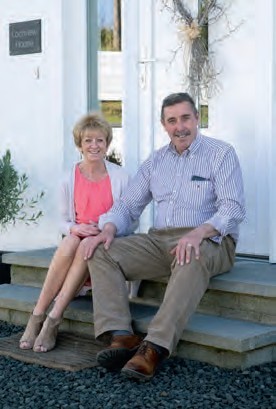
PHOTOS DOUGLAS GIBB
When William and Jess Ogg decided to launch their own livery yard business, they couldn’t have imagined the blood, sweat and tears that would be involved. Little did they know that it would take them two years to find a suitable location, and a further three to secure planning permission.
Even now the couple are happily living in their three bedroom detached home, which overlooks Loch Fitty in Fife, the frustrations of navigating the protracted planning system remain fresh in their minds. “We had to seek the help of our local MP”, says William, who insists that despite the obstacles the pair faced, they were determined not to give up. “Planning laws in Fife don’t permit you to build houses in the countryside unless you have an associated business that requires a rural location. Before considering a submission for a house, the planners wanted us to obtain consent for the business and run it for two years, just to prove it was viable.”
This tie policy was established in an attempt to deter house builders who claim they need a home in the country for commercial purposes – only to subsequently close the company and retain the large rural property. The Oggs challenged the planners, lobbied councillors and contacted their local MP. “Basically, we made a bit of a song and dance about it”, says William. “It was during the banking crash and I convinced the local authority that no mortgage provider would allow us to borrow on that basis. If, for some reason, the lender had to foreclose on the house they couldn’t sell it with this tie.”
”The construction of the house is first class”
After much negotiating, the Oggs won the case and the restriction was removed. The couple also stood firm when the planners raised concerns about aspects of the design. Their apprehension focused the use of charcoal-coloured roof tiles rather than more expensive slate alternatives. “Thankfully, after we supplied a sample unit, the planners agreed that the product we’d chosen was satisfactory.”