Heating options for extensions
Looking for an efficient, value-for-money system to ensure your new addition delivers a comfortable living environment all year round? Here’s what you need to know
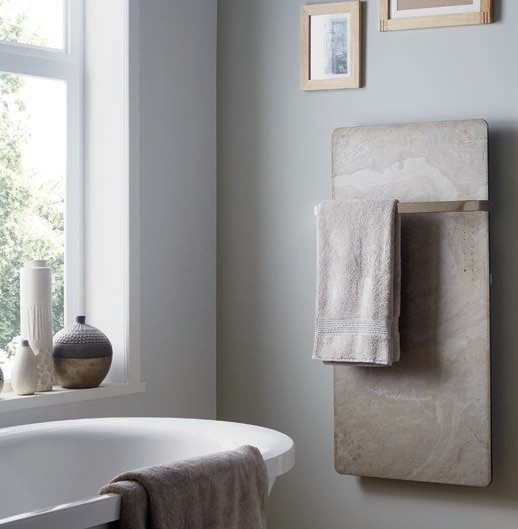
The Vetro Stone infrared radiator from Frontline Bathrooms (
www.frontlinebathrooms.co.uk) features a travertine finish
Whether you’re tackling a rear extension or converting a loft, you’ll have your sights set on creating a cosy, low-bills zone that complements the rest of your home.
A key first step is to look at your options for upgrading the thermal performance of the fabric of both the new addition and the existing house. This will minimise any extra heating load (from the added space and/or extra hot water outlets). Most homeowners aim to significantly exceed the minimum efficiency standards set out in Part L1B of the Building Regs. Thankfully, it’s pretty easy to achieve this with modern materials and a decent builder.
Taking a whole-house approach will not only make your home cheaper to heat, it might even help enable the inclusion of wow-factor features in your new extension. Vast swathes of glazed doors and big rooflights look fantastic, for instance, but they’ll never be as thermally efficient as a well-insulated wall. So look to offset their impact with cost-effective upgrades elsewhere. For example, it could cost as little as a few hundred pounds to top up your loft insulation to modern standards.
Is my boiler big enough?