PLANNING & INFRASTRUCTURE
The key to a successful smart home lies in getting the nitty gritty details behind the scenes right. Here’s what you need to know
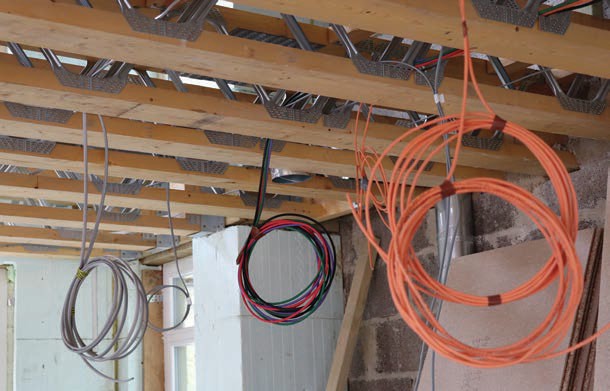
The cabling at Build It’s Self Build Education House is colourcoded, so that it’s clear which wires go to which device. Our smart home utilises the Niko system installed by Moss Technical
If you’re a regular Build It reader, you’ll already know we’re keen on the fabric-first approach. This means ensuring your building’s envelope is as high-quality as possible before you add any gadgets to make it more efficient. The same principle applies to smart homes – it’s crucial to lay the right foundations for your setup to be a success.
Early planning is key to achieving an easy-to-use house that will enhance your way of living. Start with a shopping list, separating your essentials from the nice-to-haves. For example, you might need to have control over your lights and heating, but perhaps motorised blinds and curtains aren’t a necessity. Armed with a strong brief, you can head to a smart home specialist to eke out your design and come up with a rough budget. Even if incorporating everything on your list proves cost-prohibitive initially, the right expert will be able to advise on the best solution to incorporate as much of what you want as possible, while futureproofing so that you can add those extras later on, without too much fuss.
“One of the key problems we run into is when electrics are considered as an afterthought. Get a smart home integrator on board as soon as possible – as early as your architect,” says Paul Foulkes from Theben. “If it’s not planned early enough, it can be harder to get all the different elements to communicate.” The sooner you develop the design and spec, the more value for money you can get from your smart home.
Choosing the right partner