WINDOW DESIGN GETTING IT RIGHT
Planning your new home’s glazing is about more than simply choosing a system and supplier. Opinder Liddar takes a look at the detailed decisions you’ll need to make
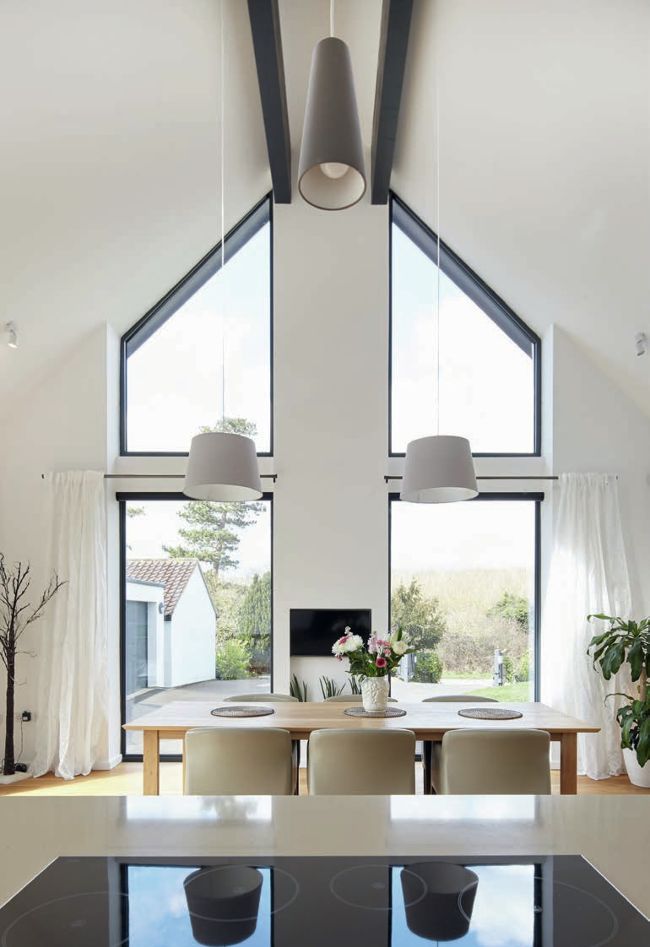
Apex glazing doesn’t have to be one solid section of glass. This design combines Kloeber’s slim-frame aluminium windows with elements of conventional walling to create a spectacular finished result
Windows are the eyes of a building and they make a significant contribution to the design success of a home. They impact how it is perceived, enable light to enter and allow views out from the property, creating drama inside and outside your home. Get the design of your windows right and your house will look and feel amazing, improving your wellbeing and adding value to the property. Get it wrong, though, and the building will appear imbalanced, spaces will be unusable – so you’ll lose out both aesthetically and financially. Here’s my guide to ensuring you get the best window design for your project.
Form & function
Designers in many architectural periods have experienced the dilemma of whether to prioritise appearance over practicality, or vice versa. The Georgians, for example, wanted an order to the external form of the building where the proportion of the windows and elevations would override how the building functions inside. This can result in oddly proportioned internal rooms.
For modern developer housing, cost is frequently the key factor – often leading to a relatively non-descript external appearance using the same type of materials and windows, so that everyone’s house looks the same. This approach leads to poorly planned houses with internal spaces that are difficult to use. At the other end of the spectrum, a building whose external appearance comes from its function alone, can appear alien in the context of others and stand out like a sore thumb where the elevations have no consideration for its external context.
The point is, form and function are both important. A good designer will be able to balance the two effectively in the creation of your home. As an architect, I will always begin the process by looking at the context of the location and establishing the important elements of the site that need to be captured in the design. For example, external views, orientation, maintaining privacy, the topography and materials found in the area all influence the design approach.
As I develop possible plans and the mass of the new building, I consider window placement to respond to the driving site influences. Once I know roughly where windows are likely to be located, I also consider how they work together externally, as well as where to introduce powerful architectural impacts, like double-height glazing, and where more discreet methods might be better.