CAMERA CINIC
Master the art of modern photography
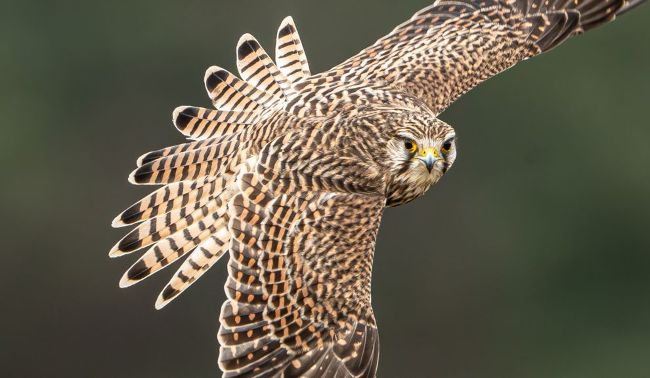
When shooting fast-moving subjects, using long lenses, working in low light or trying a creative approach, you will need to consider your shutter speed.
Will Cheung
Will Cheung
An imaging journalist and freelance photographer based in London, Cheung has a wealth of experience over several decades. www.williamcheung.co.uk
This month: Master shutter speeds
Time and how you use it has a huge impact of the destiny of your photos
This month, it’s the turn of the third member of photography’s fabulous trinity – shutter speed – to take its turn in the limelight. The lens iris controls how much light passes through to the sensor, ISO is all about the sensor’s sensitivity, while the shutter is a sophisticated timing mechanism that determines how long the sensor is receptive to light. The amount of thought you need to give to choosing the right shutter speed depends on the situation. In many scenarios, the aim is to achieve a speed that is fast enough for a sharp image. With an outdoor scene in good light and a standard lens, ensuring the speed is at least 1/125 sec is straightforward (see panel opposite for more on handheld technique).
But for fast-moving subjects, shooting with long lenses, working in low light or a more creative approach, your shutter speed selection will require deeper consideration.
Different situations demand different solutions and sometimes extra kit, such as a tripod and filters. In landscape work, for example, small f/stops and low ISO settings result in slow shutter speeds, so a tripod and graduated filters are essential. For nature photography, where long telephoto lenses are compulsory and low lighting a fact of life, you need wide f/stops and high ISOs to enable fast shutter speeds. But if you prefer high ISO speeds and a fast shutter for scenics, there’s nothing to stop you. Similarly, in nature, slower shutter speeds to get movement in your shots is a legitimate technique.
Getting creative with shutter speeds means there is no right or wrong, as long as you get the result you wanted. However, practice, experience and sound camera technique are important. Hopefully, this month’s Camera Clinic will set you on the path to successful shutter speed control.
Get the knowledge
Keeping the camera steady is a skill worth practising
Each situation is different, with your health, physiology and prevailing conditions, such as the wind or the terrain you’re standing on, all factors that influence successful shooting at slower shutter speeds. Using longer lenses also makes your images more prone to camera shake.
It’s always worth practising your hand-holding skills. Grip the camera securely in your right hand, with your left hand supporting the lens.
Stand feet apart, breathe gently and press the shutter release with a smooth action.
Even experienced photographers should give their technique the occasional health check. Factor in the latest image stabilising systems, in-body or in-lens, and you should be able to get acceptably sharp shots at relatively long shutter speeds.
Working the fractions
The right stuff to maximise the potential of shutter speeds
A SLICE OF TIME
Many DSLR and mirrorless cameras have a top mechanical shutter speed of 1/4000 sec, though some go up to 1/8000 sec. That’s fast enough to ‘freeze’ action, but even faster speeds are available on mirrorless cameras with electronic shutters. Fujifilm X System models can reach 1/32,000 sec, while the X-H2 and X-T5 top out at 1/180,000 sec. The Sony A9 III, the first camera with a global shutter, has a top speed of 1/80,000 sec.