JONI MITCHELL
“She tells a story”
Guitarist LARRY CARLTON was Joni’s co-conspirator on the Hejira sessions. “It was all about the song, nothing more,” hears Peter Watts better situation for someone like myself to come into.”
IN 1976, Joni Mitchell took the songs she had written on her searching road trips across North America into her home territory of Studio C at A&M in Hollywood. This was where Mitchell had recorded every album since Clouds and she was once more working with long-term collaborator Henry Lewy. Other familiar faces popping into the Hejira sessions included the rhythm section of Max Bennett and ex-beau John Guerin, and the LA Express horns. A vital new presence was Jaco Pastorius, whose fretless bass provided a distinctive accompaniment to Mitchell’s voice harmonica on “Furry Sings The Blues”, percussionist Bobbye Hall, Abe Most, who played clarinet on “Hejira”, and London-born jazzer Victor Feldman, who played vibraphone on “Amelia”. These were the jigsaw puzzle pieces Mitchell pulled into place. “We gave her the parts and she put them together the way she wanted to hear them,” marvels Carlton. “And it came out great. That was her magic.”
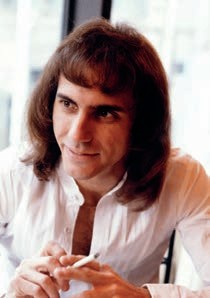
LarryCarlton in Tokyo, October1978
UNCUT: What do you remember about the Hejira sessions?
LARRY CARLTON: I got a call from Joni. When and guitar along with the guitar of Larry Carlton. I arrived, it was just me, Joni and Henry Lewy,
Carlton, a jazz guitarist and member of The the engineer. She had already laid down a double Crusaders, first worked with Mitchell on Court track of her acoustic guitar and a vocal, just a And Spark but in a way he’d been rehearsing for rough one. She then played the tracks and asked the job for years. “I had been a fan of Joni’s way me to react. I didn’t write out a chart, I just listened before I got to record with her,” he says from and reacted, using my ears and responding Hawaii, on a mid-tour break before flying to directly to the music that I was hearing. I did two Japan. “When I first heard Blue I listened to it over or three different takes for each song. The genius and over so I could figure out her tunings on ‘Little part of it was that she went back and combined Green’. I really enjoyed trying to work out all those all the different things she liked, creating these different voicings before I ever worked with her.” little guitar orchestras. On that first night we did What was different about Hejira was the way at least two tracks, maybe even three. We did Mitchell used musicians such as Carlton and maybe two or three sessions in total. I remember Pastorius. They recorded their parts in isolation, we started with “A Strange Boy”. When I was responding only to Mitchell’s guitar and rough finished, Jaco was just walking in to do exactly vocal. Other musicians were invited to come in and the same thing. He went into the booth, set up contribute, among them Neil Young, who played and responded to Joni’s guitar and vocals. I didn’t witness it, but I know it was the same process.
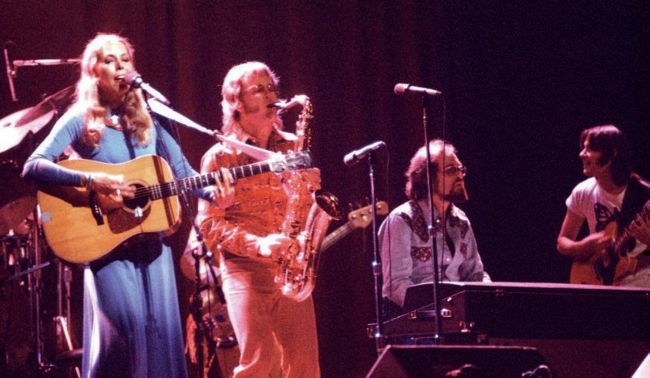
With the LA Express – (l–r) Tom Scott, Victor FeldmanandRobben Ford – at the New VictoriaTheatre, London, April 20, 1974
MICHAELPUTLAND/GETTYIMAGES;KOHHASEBE/SHINKOMUSIC/GETTYIMAGES
Was this process different to her previous records? Yes, when we did Court And Spark, I was tracking with a regular rhythm section. All the parts were done together with virtually no overdubs. This was a very different way of recording. It wasn’t difficult, though. I was just listening to our chord progressions and reacting to the chords and the spaces that Joni left. She didn’t explain what she was looking for other than my reaction. Then it came down to her wonderful editing after the fact. There is a lovely vibraphone part on “Amelia”. That’s the song on which I am playing harmonics. It was brilliant of her to add vibes as I am in the same range so you can’t really tell if it’s my guitar or the vibes getting those chimes.