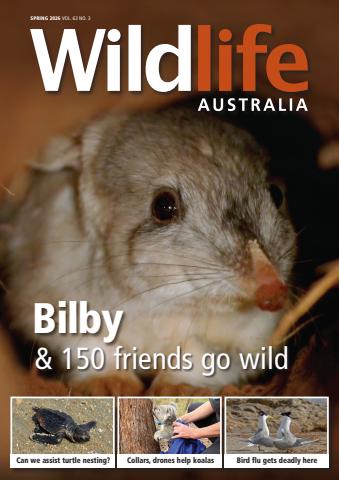
Wildlife Australia | Spring 2026 Volume 63 Number 3
FIRST WORD
Sorting a plethora of problems
OUR EDITORIAL coverage in this edition spans a plethora of problems – and sorts them without necessarily solving them. But it also looks into a plethora of solutions to these conservation problems.
For example, with the H5 bird flu pandemic creeping up on us from Australia’s remote Southern Ocean islands, it is already killing wildlife such as penguins and fur seals along with several bird species. We present a range of solutions in this edition, put forward by innovative people and organisations, CSIRO and the Biodiversity Council of Australia among them.
Byron Bay-based Wildlife Recovery Australia has been demonstrating the value of a mobile wildlife veterinary rescue service that could some into play to counter bird flu. Such a service in each state may be an idea whose time has come for permanent government funding.
The Save the Bilby Fund started in 1999 from a position of near-extinction, Queensland’s Currawinya National Park, to releasing more than 150 bilbies into the wild this year. It was a long, steady process, but it had the magic ingredients of strong volunteer support, willing donors and it received government and university research backing over time.
The story of the Archerfield Bioblitz is a more recent start on a long-term problem needing a long-term solution. Archerfield Airport was a World War Two airbase that, today, remains a busy airport surrounded by a major industrial area. On its western flank is a major wetlands intersected by Oxley Creek.
The Oxley Creek Catchment Association has worked on recovering the Archerfield Wetlands since the early 1990s. At their public wildlife recording day in August — the Wildlife Queensland Archerfield BioBlitz — more than 500 species were identified by 100 volunteers using the iNaturalist app. This is a natural long-term solution taking wing.
read more
read less
As a subscriber you'll receive the following benefits:
• A discount off the RRP of your magazine
• New issues delivered to your device on the day of release
• You'll never miss an issue
• You’re protected from price rises that may happen later in the year
You'll receive 4 issues during a 1 year Wildlife Australia magazine subscription.
Note: Digital editions do not include the covermount items or supplements you would find with printed copies.
Articles in this issue
Below is a selection of articles in Wildlife Australia Spring 2026 Volume 63 Number 3.