CHAPTER 1
Little And Large
James Parry considers the advantages of using a small hook with an appropriate lead arrangement, before going on to explain the concept and mechanics of the Reverse-D Rig, and how to go about tying it
BY JAMES PARRY
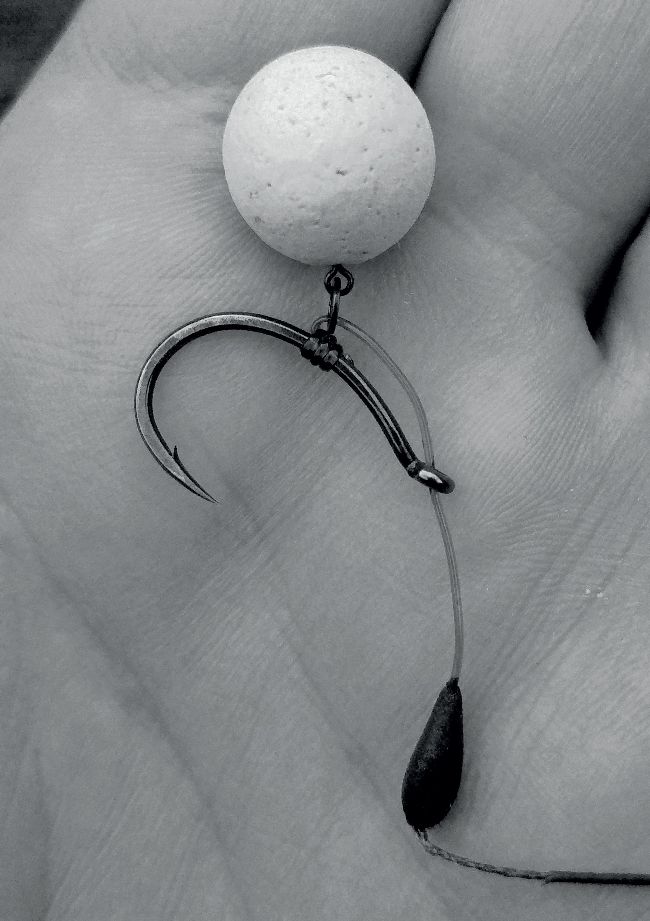
Meet the Reverse-D: neat, minimal clutter, big gape
PHOTOGRAPHY JAMES PARRY AND FRIENDS
WELL, IT’S BEEN A WHILE since I last wrote a piece for CARPology, and my life remains as hectic as ever. During my time away, I have, as ever, been playing around with rigs (also known as trekkers as mate Dan Kilgour says). It was more than twelve years ago, in fact, when I first contributed a technical piece, such articles not being for the faint-hearted. That seems like a lifetime ago… where does the time go? In that first article, I mentioned the addition of a blob of putty to the coated braid hooklink of a bottom-bait rig, an inch below the hook. The fact that almost everyone does it these days, always makes me smile, because I was the first to put that in print, in this very magazine!
STILL TINKERING AND TWEAKING
So what have I been up to lately? Well, 2020 was a complete disaster for me and my angling. I didn’t go fishing once, but family comes first. Angling is just a hobby and my family needed me. However, 2019 was a great year. It was one of my best seasons, for sure, an 83lb brace from a huge, tricky southern pit being a massive high point.
The previous year, I had started playing around with, and developing a variation of the D-Rig, and seeing as it remains in my armoury three years later, I thought it was time to share details of my findings. In my experience, there is no all-singing, all-dancing so-called wonder rig; every situation is different. My overriding angling ethos, given my limited available time, is that I always want to get results as quickly as possible, and that is the motivation behind my thought process.
Once I have located the carp—or as is often the case these days on a busy water, got a decent swim!—I want the best rig I can possibly tie, on all of my rods, be that a pop-up rig or bottom-bait presentation. If there are no snags or weed present, I will use size 10 Kamasan B745 hooks (a teflon-coated version of a B175), coupled with a light, inline running lead, direct on a fluorocarbon hooklink and main line, if rules allow. The small hooks are so difficult for the fish to deal with, and I’m sure a lot of the time, they aren’t even aware of the danger until they are lightly pricked. They then have to try and eject the rig, but the lead isn’t fixed, and so any movement of the fish is transmitted through the lead to the bobbin.