Ag Info
Chick Behaviors
By Mikayla Baxter, Ph.D.
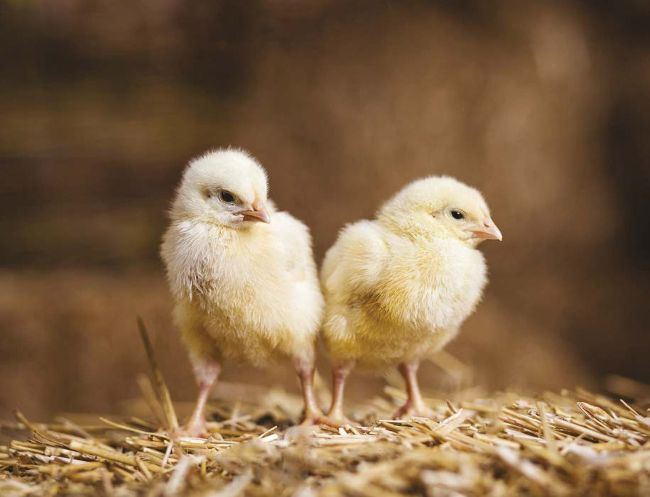
Provide wood shavings or straw in the brooder for 10 days after hatching to help reduce featherpecking in adulthood.
Our birds communicate by performing behaviors. These behaviors are strong indicators as to what they need and want and can change depending on age. Looking specifically at the behavior of newly hatched chicks, we can use our observations to better support their needs for health and proper growth.
At a very basic level, chicks need a good quality feed, fresh water and the right temperatures (around 95 degrees Fahrenheit during the first couple of days). Healthy chicks follow their instincts and begin with pecking behaviors to help increase their chances of finding food and water. While they’re motivated to perform instinctual behaviors, they need time to develop these while also learning other specific behaviors which may or may not be observed in all chicks or flocks.
Learning to eat and drink (referred to as foraging behavior) is key to chicks’ survival and, just like humans, the sooner they locate food and water the better. There are many different behaviors to observe in newly hatched chicks to ensure they’re properly eating and drinking.