BLACK BEAUTIES
A breed that is revered by poultry enthusiasts and breeders, the Ayam Cemani is held in high regard for its black feathers, skin and meat.
BY MARISSA KING
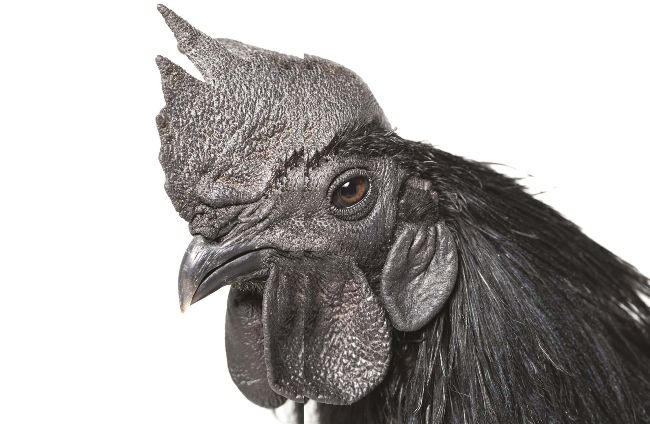
DWI PUTRA STOCK/
SHUTTERSTOCK.COM Hailing from Java, Indonesia, it’s believed that the Ayam Cemani is a cousin of the Kadaknath chicken. In its home country, the all-black Ayam Cemani is thought to bring healing and magic properties. The breed is rare in that it is one of a few breeds that have dermal hyperpigmentation, also referred to as fibromelanosis. Owning my own flock of this magical breed,I have found that they retain many undomesticated features while also allowing people to take part in their lives.
GENETIC MUTANTS
The Ayam Cemani is caused by a genetic mutation that comes from an Ayam Kedu, a black chicken with red comb and wattles. The Kedu was established in 1924 in Indonesia, and the Cemani is a subspecies. In Indonesian, Ayam is the word for “chicken” and Cemani is the word for “black.” Only recently have they been considered a separate breed, and this has been introduced by more modern civilizations. Without proper and strict culling practices, the Ayam Cemani can very easily genetically revert back to the Kedu coloring and type. No matter what line you purchase, this breed will always need work and heavy culling and are difficult to keep pure black.
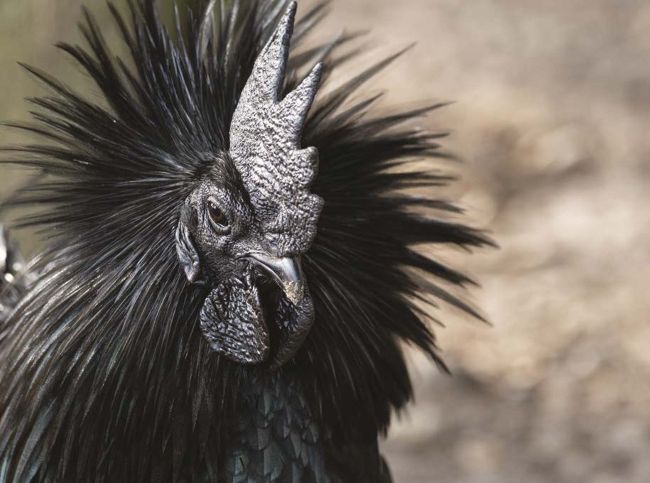
The Ayam Cemani starts laying eggs between 5 and 6 months of age, producing only between 60 to 100 eggs per year.
DANIEL
BECKEMEIER/SHUTTERSTOCK.COM To keep them this way, they have to always have two of the fibro genes present from the parents to remain all black.
To replicate this, the blackest birds are always used. Many grandparent genes do make an appearance in chicks, every now and again. Any white upon hatch is a bad sign in the eyes of many breeders, and these chicks aren’t kept for future breeding. White is referred to in the breeder world as “leakage.”