Flock Talk
Foiling Frostbite
By Ana Hotaling
The temperature was minus-5 degrees Fahrenheit, meaning it was a bundleup morning in Michigan, where I live: extra layers, balaclava, thermal socks and liners under my work gloves. As the wind blew powdered snow across our acreage, I headed out for the morning release. Feeders were topped off, frozen waterers swapped for fresh, and all coop doors secured again; the birds were all still inside.
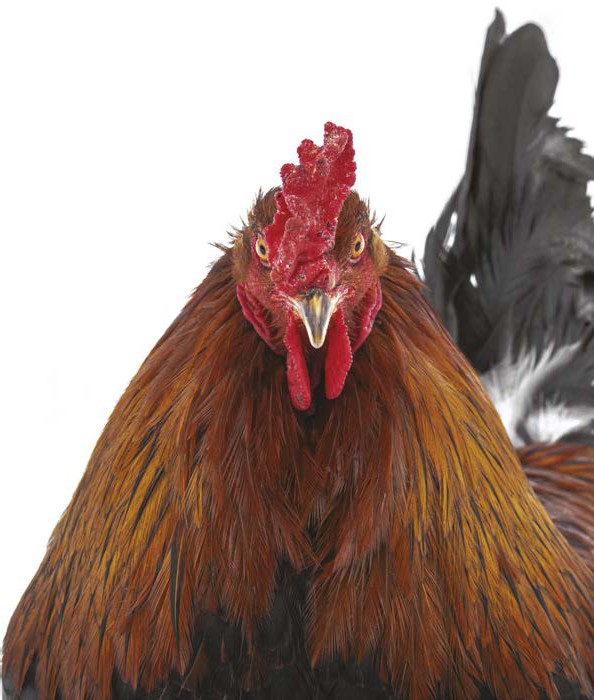
With the bone-chilling blasts driving the temperature below zero, it wasn’t safe for the chickens — or me — to be outside. When I went back inside, however, I wasn’t alone. Davey Orpington peeked out from under my arm, his eyes bright and alert but his comb dull, its tips dark purple with frostbite.
Severe frostbite affects all layers of the skin and can result in nerve damage, as well as damage to the underlying tissues, muscle and bone, and possibly infection.
“Frostbite is one of those risks for any animal, including humans, when temperatures turn cold,” says Richard Fulton, a veterinary pathologist with 30 years experience in poultry pathology and medicine.
According to Fulton, extremities such as a chicken’s toes, wattles and comb are most susceptible to frostbite as these areas naturally lack the warmth brought by proper circulation.
“Those structures then die on their ends and get black and leathery, which is referred to as dry gangrene,” says Fulton, who also holds a doctorate degree in pathology and is a diplomate of the American College of Poultry Veterinarians.