DURAN DURAN
BEFORE THE SILK SUITS, YACHTS AND BLOCKBUSTER VIDEOS SAILED INTO VIEW, DURAN DURAN’S EPONYMOUS DEBUT SAW THEM AT THEIR MOST EXPERIMENTAL – AN INNATE POP SENSIBILITY MELDED WITH ART-SCHOOL SYNTHS, PUNK ANGST AND DANCEFLOOR-FRIENDLY GROOVES…
STEVE HARNELL
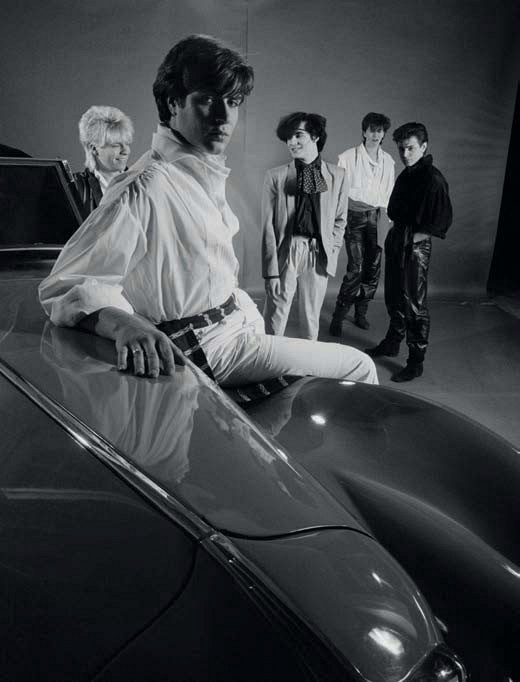
Duran Duran snapped at the legendary Paradise Garage club in New York City, 1981
Like so many of Britain’s biggest bands, a spirit of experimentalism borne out of art-school beginnings planted a fire in the bellies of Duran Duran.
When schoolboy friends Nick Rhodes (then Nicholas Bates) and John Taylor (previously the rather less rockist-named Nigel Taylor) formed Duran with collegemate Stephen Duffy, it was with a mission statement to fuse the rock energy of the Sex Pistols with the discofied style of Chic, although at the height of the ‘Disco Sucks’ movement, the band’s love of Nile Rodgers and Bernard Edwards’ work was decidedly unfashionable. However, throwing the studied synth-pop dynamics of Japan and art-rock ambitiousness of Berlin-era Bowie into the stew, the band knew they had a ready-made formula for success.
Duran played their first show at Birmingham Polytechnic on 5 April 1979 – a 30-minute set to just 20 people. A later support slot to fellow Birmingham band Fashion at the Barbarella’s venue attracted a certain Roger Taylor to the audience. “I just thought this band could be the next big thing out of Birmingham. I don’t know why I had that feeling”, the drummer explained.
As the resident band of Birmingham’s Rum Runner club, Duran were perfectly placed to immerse themselves in the myriad influences of the burgeoning New Romantic movement. Key to their learning curve was the influence of the Berrow brothers, who managed the band in their early years and also ran the Rum Runner. “My brother and I were importing all the new Giorgio Moroder-style records from New York,” Paul Berrow explained to the Guardian. “We’d been to Studio 54 and heard how dance music was changing. The Duran aesthetic was influenced by that.” Their association with the Rum Runner – John Taylor worked the door and Nick Rhodes DJ’d – meant that the band could use it as a rehearsal space and refine their act. Duran also paid close attention to the club’s regular jazz funk night, mining its sounds for inspiration.
When Stephen Duffy left the band (John Taylor originally played guitar with Simon Colley taking on bass duties), Andy Wickett replaced him as lead vocalist. Wickett, who worked nights at Cadbury’s Birmingham factory while in Duran, contributed to writing Girls On Film, although he is not credited on the final studio version. His vocals were also found on demos presented to EMI before the band were signed that were recorded at Bob Lamb’s studio in Cambridge Road, Birmingham; the first two albums were almost entirely demoed initially in Lamb’s studio.
More line-up changes were to take place before Duran settled on their most famous original quintet, including the arrival of Roger Taylor to take over from Nick Rhodes’ rudimentary drum machine. With Colley and Wickett’s exit from the band, Jeff Thomas was installed as frontman alongside new guitarist Alan Curtis.