MAN DOWN. AGAIN.
After Peter Gabriel left Genesis in 1975, the band responded with the then biggest-selling album of their career. When Steve Hackett left two years later, could they survive this second loss? In our exclusive book extract, Collins, Rutherford, Banks and Hackett tell how they again triumphed in the face of adversity.
Words: Mario Giammetti
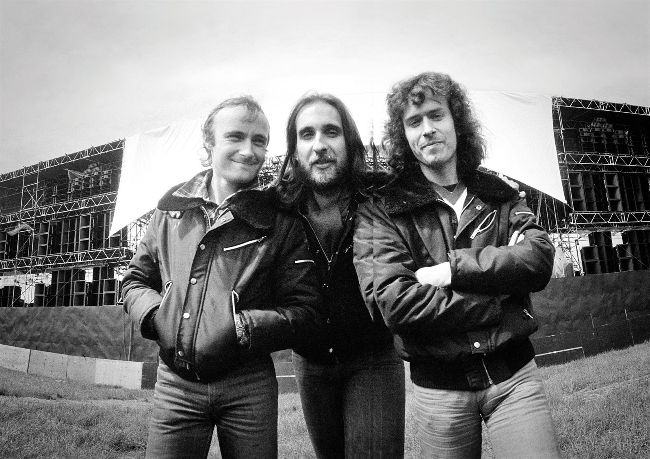
GETTY
By June of 1977, Genesis were back on the road in Europe after playing an extensive (and successful) North American and Brazilian tour. They started out in Stockholm on the 4th before moving on to Berlin. The band then played four shows in Paris (recordings from these concerts in the French capital were released a few months later as the extraordinary live album Seconds Out), followed by dates in Cologne, Offenbach am Main and Bremen in Germany, before three shows at London’s Earls Court opened by Richie Havens.
The Wind And Wuthering tour succeeded in consolidating Genesis’s standing; at long last they were stars in the UK, popular throughout Europe and had a growing following in America, added to which they gained their first and fantastic foothold in the South American market. The five musicians were, quite simply, in magnificent form. New boy Chester Thompson was the perfect drummer for Genesis, with his great technique placed at the band’s service. Now, more confident than ever in his role as frontman and having acquired a certain amount of rapport with the audience, Phil Collins sang perfectly, ironing out the few imperfections of the previous tour, and his contribution on drums was spectacular, not only in the instrumentals …In That Quiet Earth and Los Endos, but also in sections of One For The Vine, Robbery, Assault And Battery, Firth Of Fifth, Supper’s Ready and, doubling up on drums, the final sections of Afterglow and The Musical Box.
Mike Rutherford was at the top of his game as an instrumentalist too, playing on his new Shergold double-neck guitar with a 12-string at the top and bass at the bottom, not forgetting his essential contributions on bass pedals. Tony Banks was phenomenal as always on his array of keyboards, while Steve Hackett (who on the previous tour had stopped playing sitting down) appeared at perfect ease, with his guitar solos enjoying greater space than usual.
With major success finally knocking on their door, what more could Genesis want? However, for one band member, all their success did not appear to be enough.
“Steve has since said, apparently, that had he got in the car with me that day, he wouldn’t have left the band.”
Phil Collins
Steve Hackett: “I was starting to write more and more material and it was harder and harder to incorporate that into a band format. Plus, I wanted to work with other people. Brilliant though the members of Genesis were, I felt I had to take the risk in order to find out just how good I was on my own. There’s a voice that tells you that you’ve got to see whether you’re up to scratch or not. Doing the first solo record [Voyage Of The Acolyte, 1975] was a bit like turning on a tap.”
Tony Banks: “I think Steve probably felt that he couldn’t get enough of his own writing into the band. He felt that Genesis was always going to be dominated a little bit by what Mike and I decided and that he wouldn’t be able to get his stuff through. I have to say, there were various things that he wrote that we didn’t do, you know, that maybe we didn’t particularly go for. The important thing was that we all had to like it, unless you shouted very loud, in which case you ended up doing it anyhow, like I did with One For The Vine. I think he felt frustrated by that and I’m sure that was one of the reasons why he left. Beyond that, I’ve no idea. Perhaps he thought it was time to try and go solo and, you know, take his chances.”