THE SEVEN WEEKS THAT CHANGED ROCK
The 80s weren’t dead and the 90s hadn’t really begun. This is the story of how seven weeks of summer in 1991 belonged to rock (and not just grunge).
Words: Rich Hobson
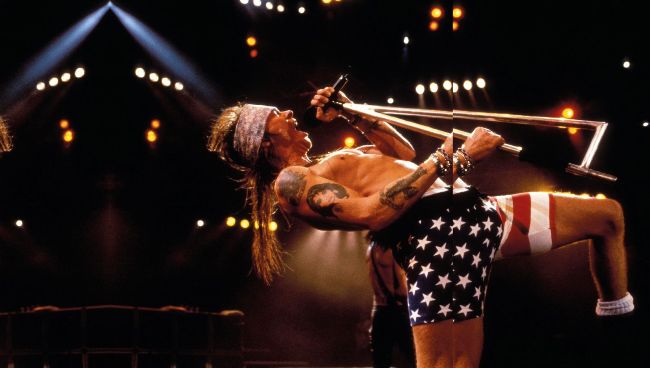
Guns N’ Roses: occupied the top two positions in many countries’ charts in
’91 with their
Use Your Illusion pair.
GETTY
In rock history, 1991 is most often seen as The Year Everything Changed. Anecdotally, grunge crashed down like a meteorite to annihilate the hair-metal dinosaurs that had dominated the rock landscape over the previous decade. But in truth there was no instant annihilation event for LA glam (or thrash, or just about any other form of popular guitar music of the 80s). Instead, a procession of landmark releases from August to September 1991 helped transform alt.rock’s steadily growing snowball into an all-enveloping avalanche.
“By the end of the late eighties, the whole scene needed a massive shake-up,” Kerrang! editor at the time Geoff Barton told Classic Rock. “Something was needed to turn the tide in rock, but I don’t think we anticipated the fallout.”
Rock journalists may have grown tired of glam’s increasingly cartoonish hedonism, but it was still big business as far as the record-buying masses were concerned. The summer began inauspiciously. On June 17 Van Halen released their ninth studio album For Unlawful Carnal Knowledge which shot straight to No.1 in both the UK and US. Two weeks later Canadian pop-rocker Bryan Adams began conquering the singles charts with the massive Everything I Do (I Do It For You). The power ballad may have been a slice of 80s rock cheese, but it was an undeniable commercial sensation as it topped international charts, including a record-holding 16 weeks in the UK and a flabbergasting 39 weeks in Canada. And this, in the year that was supposedly all about grunge?
Adams’s success wasn’t anomalous; in January the Scorpions had released Wind Of Change, an international smash that sold more than 10 million copies worldwide. Elsewhere, Extreme’s More Than Words claimed the top spot in the US on June 8, 1991. Neither band was particularly known for exploring their softer side (although Scorpions had certainly dabbled in their 26-year career to that point), but a trip to ballad country proved to be exactly what they needed in order to reach new commercial peaks, revitalising commercial interest in albums that had already been out for 12 months.