KURTIS MANTRONIK
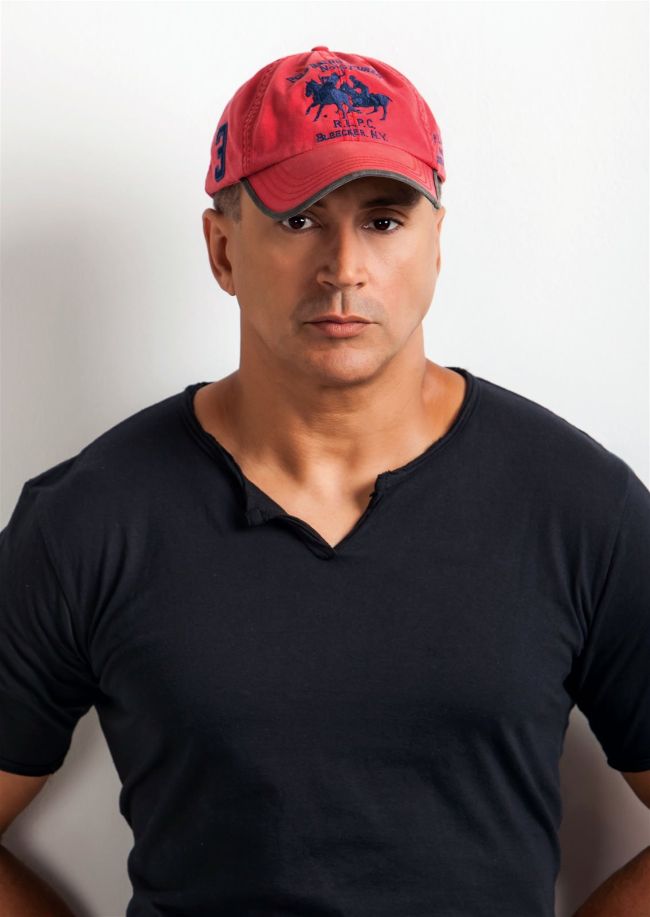
Photo © Mike van Heerden
Kurtis Mantronik likes to keep moving. Born in Jamaica, he then moved to Canada before joining his mother in a New York apartment in the late-70s. He spent 11 years in the UK and has eventually ended up in Johannesburg, South Africa. (More about that move later.)
The timing of young Kurtis’ move to America’s East Coast was perfect. Mantronik – born Kurtis el Khaleel to a Jamaican mother and a Syrian father – arrived in New York at the same time as a new-fangled music that people were calling ‘hip-hop’.
“Back when I was in Canada, I listened to traditional music in a traditional setting,” he explains. “By that, I mean music that was made by people playing guitars and drums. Chart music. Pop groups like ABBA. And if you wanted to listen to music, you would go to a club or an arena. You would go to the school disco. You turned on the radio.
“But when I got to New York, it felt like music was going through some sort of revolution. I would walk down the street and suddenly three guys would set up their turntables and speakers next to a lamppost. They’d break off the lamppost cover and wire their turntables into the electricity supply. One guy would start cutting up all sorts of crazy records on the turntables, with another rapping over the top. The third guy would bring out a cassette player to record the set, which would then be on sale a couple of days later.
“At first, I couldn’t understand what was happening. It was beyond anything I’d ever imagined. Where was the guitarist and the fancy outfits? These guys didn’t even need a stage, they were right there on the sidewalk. After a couple of weeks, I was in love with this stuff. Rap, hip-hop… call it what you want. As far as I was concerned, it was the future of music.
“And it became part of my future, too.”
Along with LL Cool J, Afrika Bambaataa, Grandmaster Flash, Kool Herc, the Beastie Boys etc, Mantronik – working under the band name, Mantronix – became one of the scene’s original heroes, shaping the sound of this innovative electronic music with tracks like Needle to the Groove, Fresh is the Word and Bass Machine.
Indeed, some argue that 1986’s Bass Machine was the tune that provided the rhythmic blueprint for Miami bass and trap.