Why are space-based Earth observations so important?
Our experts answer your questions
Satellites can trace the transport and transformation of atmospheric gases like ozone, carbon monoxide, nitrogen and even some organic compounds. Some of these gases can also be seen day and night. We use these gases to study how emissions from cars, industry, trees and fires all mix and change as they travel across the globe.
Studying atmospheric chemistry from the ground is like if you are trying to make a map but you can only walk over a few square kilometres and look around. If you get in a hot-air balloon, helicopter or aeroplane, you see the connections and context. It’s like that for us, except with something that is evolving and changing.
Weather satellites were a huge transformation, especially for things like storms that have huge impacts on people. Now we can see hurricanes and typhoons in advance, and all of the data from these satellites has been important in the improvement of weather forecasts.
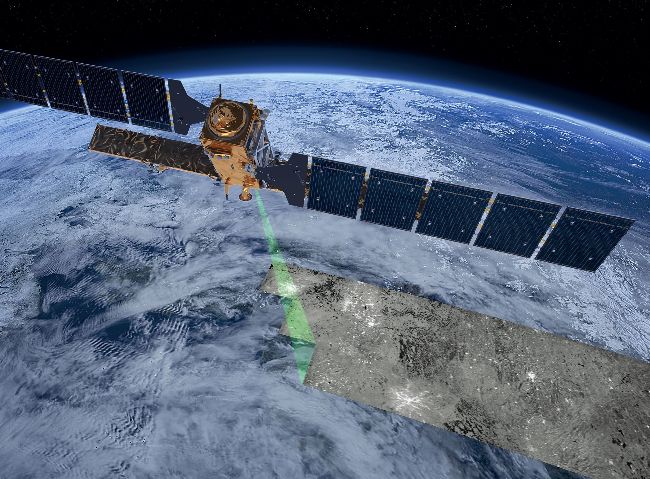
Below: Satellites observing Earth have been able to reveal a lot about how our home planet is evolving

ESA; Headshot © NASA’s Goddard Space Flight Center
We also have new techniques to use from space. A recent NASA article detailed the ice loss and growth on Antarctica using the space-based ICESat-2. It uses a laser to send out light pulses and then measures the timing of the returned light to get a really precise measurement of where the surface is. We are learning a lot about ice sheets and glaciers and how they evolve, which is really important for understanding our changing planet.
Dr Annmarie Eldering is deputy project scientist for NASA’s Orbiting Carbon Observatory-2 (OCO-2)
Did you know?
NASA’s TIROS-1, launched in April 1960, sent back the first television footage of weather patterns to be taken from space.