Sie sehen gerade die Germany Version der Website.
Möchten Sie zu Ihrer lokalen Seite wechseln?
9 MIN LESEZEIT

ASKSPACE

PLANET

How do you study the core of a planet?
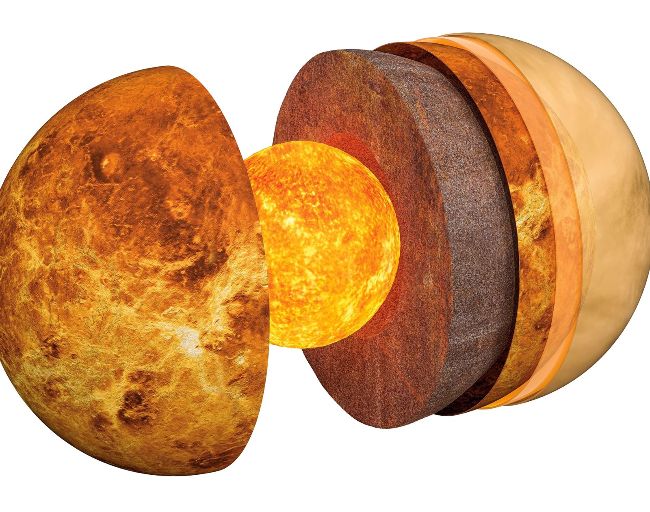
Different methods and missions have informed us about planetary cores

Planetary cores, dominated by iron in terrestrial planets, can’t be directly sampled, but geophysics-based methods provide tools to probe the cores of planets and moons. On Earth, seismic waves were used to measure the core’s radius. The nowdefunct InSight mission used seismic shear waves reflected from the surface of the core to estimate Mars’ core radius. These methods require a lander which is equipped with a sensitive seismometer and suitable seismic sources – in this case marsquakes. Similar techniques have been used to measure the small lunar core, where both moonquakes and surface impacts were detected. A future seismic mission to the Saturnian moon Titan is planned by NASA.

In the absence of a seismometer, careful estimates of the rotational and gravitational properties of a planet, like those made for Mercury by MESSENGER or for Mars by orbiters and the InSight lander, can be used to infer properties of the core. Recent observations of vibrations in Saturn’s rings have been used with gravitational measurements to learn about the properties of its huge ice-rock core. Finally, examination of planetary magnetic fields provides important information about the temperature and heat flow inside cores of some planets within our Solar System. Dr Jessica Irving, senior lecturer at the School of Earth Sciences, University of Bristol
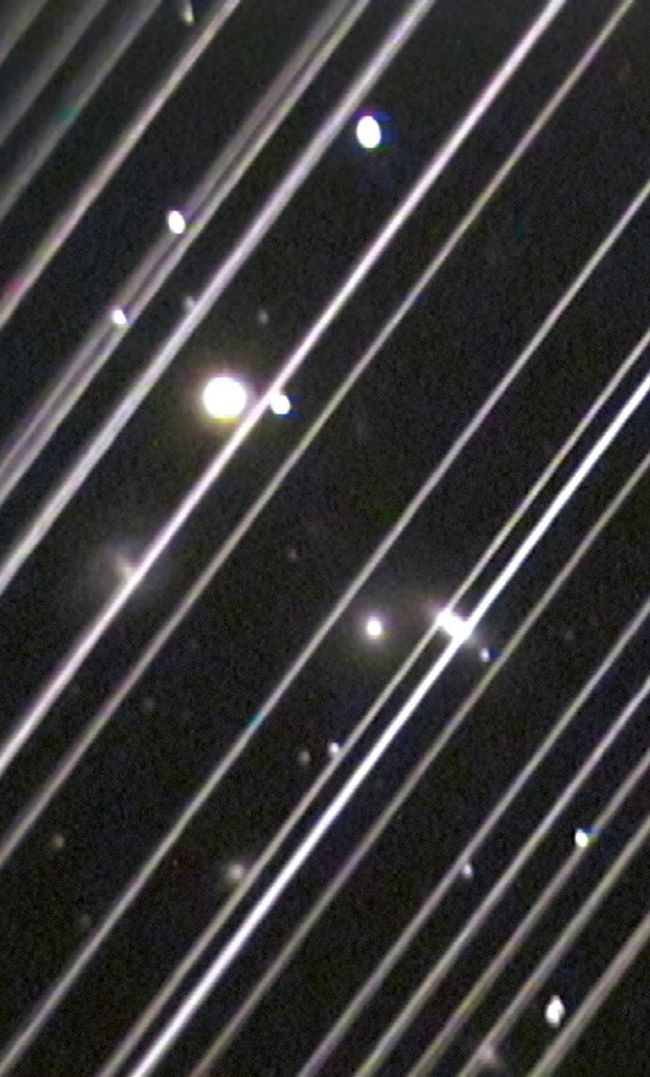
Starlink satellites are affecting the views around the world

ASTRONOMY

If low-Earth-orbit satellites are problematic, could they just be placed higher?

Actually, that would be worse. It’s a little complicated because you could think that maybe a lower orbit satellite would be brighter because it’s closer, which is true, but the trick is that it moves faster in a lower orbit because it has to not fall out of the sky. That means that when you are taking a picture it will move out of the way faster and the pixels won’t linger long enough to make as bright of a streak in the image, which is better.

Schalten Sie diesen Artikel und vieles mehr frei mit
Sie können genießen:
Genießen Sie diese Ausgabe in voller Länge
Sofortiger Zugang zu mehr als 600 Titeln
Tausende von früheren Ausgaben
Kein Vertrag und keine Verpflichtung
Versuch für €1.09
JETZT ABONNIEREN
30 Tage Zugang, dann einfach €11,99 / Monat. Jederzeit kündbar. Nur für neue Abonnenten.


Mehr erfahren
Pocketmags Plus
Pocketmags Plus

Dieser Artikel stammt aus...


View Issues
All About Space
Issue 148
ANSICHT IM LAGER

Andere Artikel in dieser Ausgabe


All About Space
WELCOME
ISSUE 148 © Alamy SCAN HERE TO GET
ALL ABOUT SPACE
Future PLC Quay House, The Ambury, Bath, BA1
LAUNCHPAD
Ghostly glow of a distant galaxy
21 August 2023
A mesmerising look at the Ring Nebula
21 August 2023
Dark Energy Camera reveals galaxies in a ‘tug of war’
10 August 2023
Webb stuns with a glowing portrait of actively forming stars
26 July 2023
NASA may have unknowingly found and killed alien life on Mars 50 years ago, a scientist claims
KEEP IN TOUCH /AllAboutSpaceMagazine @spaceanswers space@spaceanswers.com An artist’s
The SKA electronics are more radio -quiet than a smartphone on the Moon
New electronic devices designed to power the antennae
A bubble of galaxies spanning a billion light years could be a fossil of the Big Bang
Astronomers have discovered an immense bubble of galaxies
India’s lunar lander finds the first evidence of a moonquake in decades
The lander “has recorded an event, appearing to
Webb finds an exoplanet surface that may be covered in oceans
The James Webb Space Telescope has discovered evidence
Dark matter ‘clumps’ found by tapping into general relativity
Artist’s impression of dark matter © Getty Astronomers
FASTER THAN THE SPEED OF LIGHT
The speed of light is the universe’s ultimate speed limit, but could there be a way to get around it?
INTERVIEW
SPACE HOTELS
Have you achieved all your travel goals on Earth? If so, a space-based outpost could be your next trip
“I really thought we might be in trouble”
On 24 September, NASA’s OSIRIS-REx spacecraft will drop off a piece of space rock from asteroid Bennu at Earth. Ahead of the historic sample landing, we catch up with Dante Lauretta, the mission’s chief scientist, to learn about the obstacles that nearly thwarted the mission
FOCUS ON
A RARE IRON METEORITE COULD REVEAL THE SECRETS OF THE EARLY SOLAR SYSTEM
The sample is the first piece of iron space rock from a parent body with a known orbit
NASA’S NEW HORIZONS WILL INVESTIGATE URANUS AND NEPTUNE, AND YOU CAN HELP
By taking part, you could help solve the mystery of Uranus’ missing heat
IMPOSSIBLE COSMIC PHENOMENA
We know a lot about space, but there’s more we can’t explain… including these ten things that appear to defy science
THE ARTEMIS IV CREW WILL BE THE FIRST TO USE NASA’S MOON-ORBITING GATEWAY
The crew will include one European astronaut
100-YEAR ‘MEGASTORMS’ ON SATURN SHOWER THE PLANET IN AMMONIA RAIN
The atmospheric turbulence of the gas giant put Earth’s
UNRAVELLING THE MYSTERY OF LIFE
Scientists have begun taking a new approach to discovering the origin of life and are already bridging gaps in our knowledge
A SETTLEMENT COULD BE STARTED ON MARS WITH JUST 22 PEOPLE
Using computer simulations, scientists determined the personality types best suited for stays of up to 28 years on the Red Planet
YOUNG STARS CAUGHT BELTING HIGH-ENERGY GAMMA RAYS FOR THE FIRST TIME
FOCUS ON
THE NIGHT SKY IN 2024
The most exciting and fascinating events you can observe next year
STAR-STUDDED STELLAR NURSERY SHINES IN A NEW HUBBLE PHOTO
The telescope captured a massive protostar hidden behind star-forming clouds of dust and gas
INSTANT EXPERT
IF HUMANS WENT EXTINCT, WHAT WOULD EARTH LOOK LIKE A YEAR LATER?
Have you ever wondered what the world would be like if everyone suddenly disappeared?
STARGAZER
WHAT’S IN THE SKY?
What to look out for during this observing period
STARGAZER
MOON CALENDAR * The Moon does not pass
THIS MONTH’S PLANETS
The king of the Solar System shines brightly in the evening sky, offering a splendid view for astronomers
HARPALUS CRATER
Our destination this month is the star of one of the most famous sci-fi films ever made
NAKED EYE AND BINOCULAR TARGETS
As winter looms on the horizon, relax by enjoying these celestial treats
TACKLE THE TREASURES OF ORION
Turn your telescope to the Hunter and you’ll be rewarded with a splendid selection of deep-sky targets. Some are easy, but some are a little harder to spot
NORTHERN HEMISPHERE
The clocks go back at the end of this month, giving more time to view a splendour of night-sky objects
SKY GUIDE
This visually appealing and informative stargazing app now comes in a free version with impressive in-app upgrades
IN THE SHOPS: DSLR CAMERAS
Here’s our round-up of the best digital cameras on the market right now
MICHAEL S. HOPKINS
NASA astronaut and SpaceX Crew Dragon commander
Chat
X
Pocketmags Unterstützung